Building a bridge is hard. Delays, high site labor, traffic disruption, and weak coordination can quickly raise project risk. For contractors and project owners, a prefabricated steel bridge offers a faster, safer, and more controlled way to complete bridge construction.
A prefabricated steel bridge is a factory-made bridge system designed, fabricated, inspected, shipped, and assembled on-site. It can be used for pedestrian bridge, vehicular access, industrial roads, rural crossings, port projects, and temporary or permanent infrastructure. Modular steel bridge solutions help accelerate construction time while improving quality control.
What Is a Prefabricated Steel Bridge?
A prefabricated steel bridge is a bridge made from steel parts that are fabricated in a factory before they arrive at the project site. These parts may include steel girders, truss sections, bridge modules, deck panels, steel plate elements, railings, and connection systems.
In simple terms, the bridge is not built piece by piece from raw material at the site. Instead, the manufacturer produces bridge sections in a controlled workshop. Then the parts are packed, delivered, and installed on prepared abutment or foundation areas.
For global B2B buyers, this model is useful because it gives better control over bridge design, fabrication quality, weld inspection, delivery schedule, and on-site assembly. KXD Steel lists prefabricated steel bridge products including welded steel plate girder bridges, modular steel truss bridges, prefabricated modular steel bridges, and welded box girder bridges for infrastructure projects.
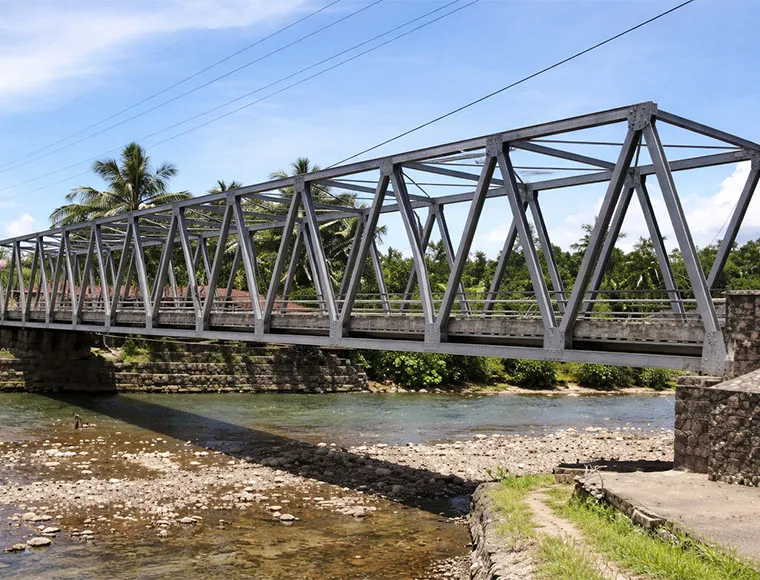
Why Are Modular Steel Bridge Systems Becoming Popular?
Modular bridge systems are popular because they help solve a real project problem: time. Traditional bridge construction can block roads, delay public works, interrupt industrial access, and create long periods of on-site labor.
A modular steel bridge can reduce these problems. The main steel bridge parts are made off-site while civil works happen on-site. This parallel work helps project teams accelerate delivery. The Federal Highway Administration explains that prefabricated bridge elements and systems are built off-site or near-site and are designed to reduce on-site construction time and traffic impact compared with conventional methods.
For project owners, the value is clear:
- Less on-site work
- Faster bridge installation
- More stable factory quality
- Lower traffic disruption
- Better schedule control
- Cleaner construction management
That is why modular steel bridge solutions are used for rural roads, mining access roads, industrial parks, port areas, pedestrian crossings, temporary bridge projects, and permanent modular infrastructure.
How Does a Prefabricated Modular Bridge Reduce Construction Time?
A prefabricated modular bridge reduces construction time because many bridge parts are prepared before they reach the job site. The factory can fabricate the truss, girder, deck support, steel beams, and connection plates according to approved drawings.
At the same time, the contractor can prepare the foundation, abutment, site access, crane plan, and road closure plan. When the steel bridge system arrives, the site team can install the bridge modules more quickly.
This is part of accelerated bridge construction, often called ABC. FHWA and state DOT resources describe ABC and prefabricated bridge elements as methods that improve planning, quality control, construction speed, and site safety.
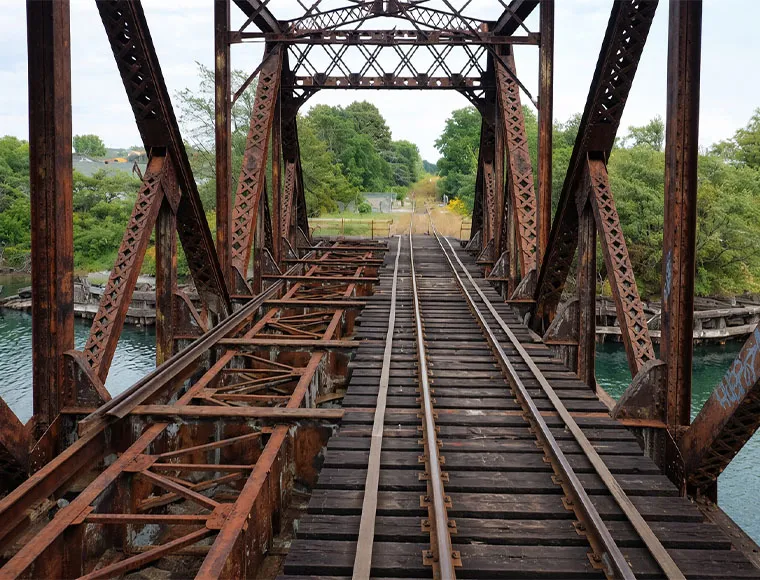
How Do Truss, Girder, Deck, and Abutment Parts Work Together?
A steel bridge works because each part has a job.
The truss or girder carries the main load. The deck supports vehicles or pedestrians. The abutment supports the bridge ends and transfers the load to the ground. Bracing helps keep the bridge stable. Fasteners and welded connections hold the structure together.
For a modular steel bridge, these parts must match each other. A strong truss is not enough if the bridge deck is not designed for the traffic load. A good girder is not enough if the abutment is weak. A good weld is not enough if the installation team ignores alignment.
That is why professional bridge design must consider:
- Span length
- Bridge width
- Pedestrian or vehicular use
- Deck type
- Load rating
- Site conditions
- Corrosion environment
- Local design requirements
- Shipping limits
- Crane and installation plan
Good bridges feature simple modular construction, but that simplicity comes from careful engineering.
How Does Factory Fabrication Improve Quality and Safety?
Factory fabrication gives better control than field-only work. In a workshop, the manufacturer can control cutting, drilling, fit-up, welding, surface preparation, coating, and trial assembly.
A trained welder can follow a confirmed procedure. The factory can check dimensions before shipping. The quality team can inspect weld areas, bolt holes, paint thickness, and packing marks. This reduces the chance of problems during bridge installation.
For steel bridge projects, coating is also important. Bridges may face rain, salt, humidity, chemicals, and temperature changes. Weathering steel may be suitable for some environments, but not all.
For some projects, a painted or galvanized system may be a better choice. The best option depends on climate, corrosion risk, maintenance plan, and project budget.
What Site Conditions Affect Modular Bridge Installation?
Site conditions can change the design and installation method. A short pedestrian bridge over a small creek is very different from a heavy modular steel bridge for industrial vehicles.
Before fabrication, buyers should confirm:
- Soil condition
- Water level
- Flood risk
- Access road
- Crane access
- Span length
- Local wind and seismic load
- Required bridge width
- Foundation and abutment design
- Whether the bridge is temporary or permanent
The bridge may also need to fit shipping rules. A large prefabricated modular bridge may be divided into smaller bridge sections or bridge modules for container or breakbulk shipping.
In many global projects, the best path is to send drawings, photos, site data, and load requirements first. Then the manufacturer can help develop a practical modular bridge system for the real project.
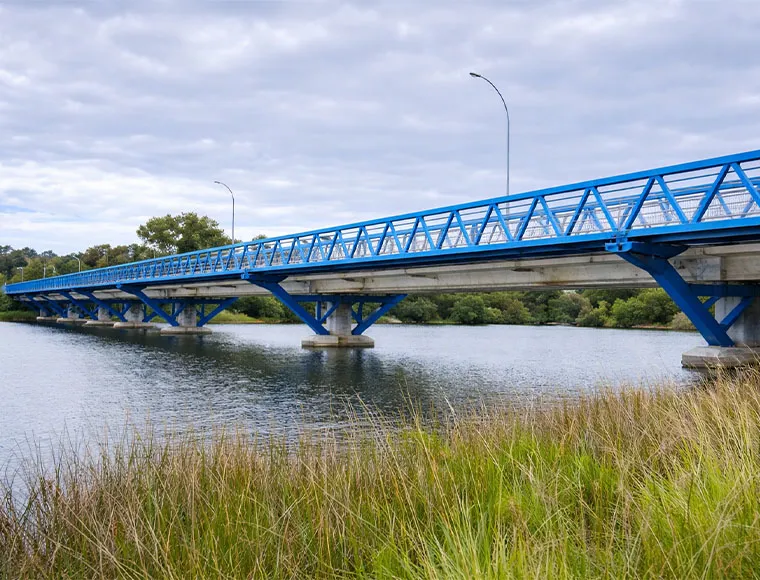
How Should Global Buyers Choose a Steel Bridge Manufacturer?
A good steel bridge manufacturer should not only quote a low cost. The supplier should understand engineering, fabrication, export delivery, and installation support.
For global B2B buyers, I suggest checking these points:
| What to Check |
Why It Matters |
| Bridge design ability |
Confirms safety and project suitability |
| Fabrication capacity |
Controls delivery time and quality |
| Welding procedure |
Affects strength and long-term safety |
| Coating system |
Protects against corrosion |
| Export experience |
Reduces shipping and documentation risk |
| Installation guidance |
Helps the on-site team build correctly |
| Project communication |
Avoids costly mistakes |
KXD Steel is positioned as a Qingdao-based steel structure manufacturer and prefabricated building solution provider.It serves custom steel buildings, prefabricated bridges, container houses, warehouses, industrial projects, commercial buildings, aviation, agriculture, and infrastructure sectors, with design, manufacturing, export, and installation support.
For bridge buyers, this one-stop model matters. You do not only need a steel bridge. You need a bridge solution that can move from idea to drawing, from drawing to fabrication, from fabrication to shipment, and from shipment to safe installation.
What Makes Modular Steel Bridge Solutions Suitable for Global Projects?
Global projects often face different codes, climates, road loads, and construction habits. A modular steel bridge helps because the system can be adapted.
For example:
- A mining site may need a heavy vehicular bridge.
- A farm project may need a low cost modular bridge over a drainage channel.
- A city park may need a clean pedestrian bridge.
- A contractor may need a temporary modular bridge for traffic diversion.
- A port may need a durable bridge system for equipment access.
- A rural road may need permanent modular steel bridge access.
This flexibility is the reason many buyers search for terms like modular steel, modular bridge, steel bridge systems, prefabricated modular steel bridges, and even compare industry examples such as TrueNorth Steel while looking for the right technical model.
KXD Steel’s role is to help buyers turn those broad searches into a specific project plan.
FAQs
What is a prefabricated steel bridge?
A prefabricated steel bridge is a bridge made from factory-fabricated steel parts. These parts may include truss sections, steel girders, deck systems, railings, and connection parts. The bridge is shipped to the site and assembled on prepared supports.
Is a modular steel bridge suitable for vehicles?
Yes. A modular steel bridge can be designed for vehicular traffic if the load rating, deck system, span, width, and foundation are properly engineered. Buyers should provide vehicle type, axle load, and local design standard before production.
What is the difference between a truss bridge and a girder bridge?
A truss bridge uses triangular steel members to transfer load efficiently. A girder bridge uses main steel girders to support the deck. Truss bridges are often useful for longer spans and modular systems, while girder bridges are common for road and industrial access.
Can a prefabricated bridge be used as a temporary bridge?
Yes. Some modular bridge systems are designed for temporary bridge use, such as emergency access, construction detours, mining roads, and temporary industrial routes. Other systems can be designed as permanent modular bridges.
How long can a steel bridge last?
Service life depends on design, materials, environment, coating, maintenance, and loading. FHWA service life design references discuss a normal bridge service life basis of 75 years, with enhanced and maximum service life categories also used in planning.
What information does KXD Steel need for a bridge quote?
KXD Steel needs the bridge span, width, use type, load requirement, project location, local code, site photos, foundation condition, coating preference, delivery destination, and installation support needs. Drawings are helpful but not always required for the first discussion.
Conclusion
A prefabricated steel bridge gives project owners a practical way to build faster, reduce on-site work, and improve quality control. For pedestrian access, road traffic, industrial routes, ports, farms, and infrastructure projects, modular steel bridge systems offer flexible design and reliable performance.
The key is not just buying steel. The key is choosing a partner that can support bridge design, fabrication, coating, shipping, and installation planning.
KXD Steel serves global B2B projects with custom steel buildings, prefabricated steel bridge solutions, and one-stop steel structure manufacturing support. For your next bridge project, send your span, load, site condition, and project drawings. A clear technical proposal is the first step toward a safer, faster, and more cost-controlled bridge.



 May 25, 2026