Equipo técnico y de proyectos de KXD Steel | Grupo de Ingeniería de Estructuras de Acero | Publicado el 2 de septiembre de 2026
A puente modular de acero es una estructura prefabricada que se transporta en secciones atornilladas, en lugar de construirse mediante vertido o soldadura en el sitio. La configuración adecuada —cercha, viga de alma llena o viga cajón soldada— depende menos de la luz por sí sola que de cómo se cargará, se accederá y se ensamblará el cruce.
Tres tipos estructurales, tres funciones diferentes
No todas las celosías de acero tienen el mismo aspecto cuando se va más allá de las fotos de marketing, y las tres configuraciones que fabrica KXD resuelven problemas diferentes.
Los puentes de celosía de acero utilizan elementos triangulados para soportar la carga, lo que reduce el peso del acero en relación con la luz. Son adecuados para cruces de carreteras y vías ferroviarias en los que es inevitable dejar un vano largo sin apoyos y en los que el diseño de malla abierta también facilita las inspecciones posteriores.
Los puentes de vigas de chapa se basan en chapas macizas soldadas en lugar de una malla triangulada. Cuesta menos fabricarlos para luces cortas y medias, y su intradós plano facilita el trabajo cuando el gálibo bajo el tablero es reducido, como en una pasarela peatonal sobre una carretera, por ejemplo.
Los puentes de vigas cajón soldadas cierran la sección para formar una caja resistente a la torsión. Esa rigidez torsional es especialmente importante cuando el puente estará sometido a cargas desiguales o descentradas, como en rutas de transporte minero, pasos elevados urbanos curvos o cruces que soportan tanto tráfico vehicular como peatonal sobre un tablero asimétrico.
Ninguna de las tres es universalmente “mejor”. Una viga de chapa especificada para una carretera de transporte minero con carretillas elevadoras que aplican cargas laterales se torsionará más que una viga cajón; una viga cajón especificada para una pasarela peatonal corta suele pagar por una rigidez que nadie necesita.
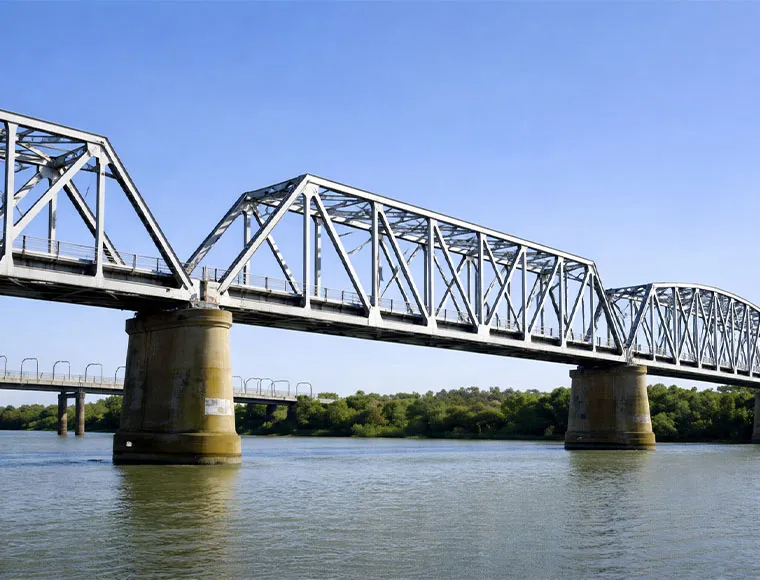
Dónde se utiliza cada configuración
Las aplicaciones publicadas por KXD para esta línea de productos abarcan proyectos de carreteras, ferrocarriles, pasos peatonales, instalaciones industriales, minería, accesos temporales y pasos elevados urbanos. Hacer coincidir el tipo de estructura con el caso de uso se ve así en la práctica:
1. Cruces de carreteras y ferrocarriles: configuración de celosía (truss) para tramos libres largos con cargas predecibles y centradas.
2. Pasos elevados peatonales y urbanos ligeros: viga de placa (plate girder), priorizando un menor costo de fabricación y una menor profundidad del tablero.
3. Rutas de transporte mineras e industriales: viga cajón (box girder), donde la carga torsional generada por equipos pesados es habitual y no ocasional.
4.Puentes de acceso temporal — celosía o viga de placa, elegidos principalmente por la rapidez con que se atornillan los módulos entre sí y la facilidad con que pueden trasladarse.
Los proyectos de acceso temporal merecen una observación aparte: aquí el factor decisivo rara vez es la capacidad de carga. Lo que importa es cuántas conexiones atornilladas debe hacer una cuadrilla antes de que el tablero se abra al tráfico, lo cual es más una cuestión de programación que de ingeniería.
Comparación de tipos de un vistazo
| Factor |
Puente de celosía |
Puente de vigas de alma llena |
Viga cajón soldada |
| Uso habitual |
Carreteras, ferrocarriles, grandes luces |
Peatonal, luces cortas a medias |
Minería, industrial, cargas curvas/asimétricas |
| Trayectoria de carga |
Elementos triangulados |
Alma maciza soldada |
Sección cajón cerrada resistente a la torsión |
| Rigidez torsional |
Moderada |
Inferior |
Máxima |
| Complejidad de fabricación |
Mayor (más soldaduras/conexiones) |
Inferior |
Mayor (soldadura de sección cerrada) |
| Espacio libre de la plataforma |
Se requiere más profundidad |
Intradós poco profundo |
Moderada |
| Mejor opción para proyectos temporales/reubicables |
Sí |
Sí |
Menos común |
En comparación con los comunicados de prensa de proveedores y el lenguaje de solicitudes de patentes que dominan la mayoría de los resultados de búsqueda sobre este tema, esta tabla está diseñada para responder una pregunta más específica: qué configuración se ajusta a una condición dada de carga y acceso, no qué marca construyó el puente más alto el año pasado.
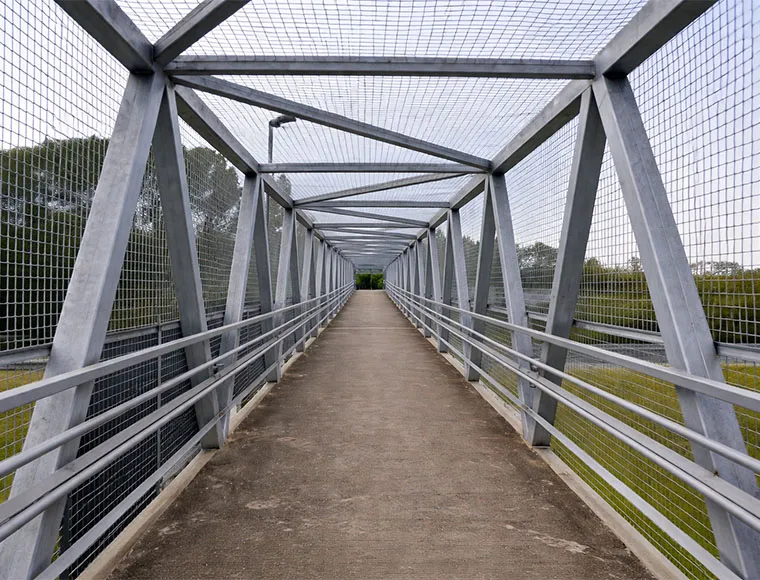
Construcción Modular: Lo Que “Atornillado” Realmente Cambia en Sitio
El parámetro que más afecta un cronograma de construcción no es la luz ni el grado de acero, sino si el puente es soldado en campo o modular atornillado. El Puente de Acero Prefabricado de KXD (Puente de Acero Modular, modelo KXDF-01) se fabrica y pre-ensambla en el taller, luego se envía en secciones que se unen con pernos en el sitio.
Esto desplaza el trabajo de ruta crítica del campo a la fábrica:
- Las secciones se cortan, sueldan y pre-perforan para que coincidan en el taller, donde las tolerancias están controladas y es económico detectar el retrabajo.
- Los módulos se envían al sitio como unidades discretas y levantables en lugar de planchas y vigas en bruto.
- Los equipos atornillan las conexiones en secuencia en lugar de realizar soldaduras in situ, lo que reduce el número de operaciones dependientes de las condiciones climáticas.
- La inspección se centra en el par de apriete de los pernos y la alineación, en lugar de en los controles de calidad de soldadura que requieren inspectores de soldadura certificados en el sitio.
La contrapartida es que las conexiones atornilladas requieren tolerancias de fabricación más estrictas desde el principio: un error de taller que con una soldadura in situ se corregiría rápidamente se convierte en una pieza enviada que no encaja. Esa es una limitación real que conviene tener en cuenta, no una simple nota al margen.
Dónde se ubica este producto en cuanto a luz y tamaño de pedido
Los parámetros publicados por KXD para esta línea son más limitados que los de sus productos de construcción, y vale la pena decirlo con claridad en lugar de disfrazarlo con adjetivos:
- Configuraciones ofrecidas: armadura de acero, viga de placa, viga cajón soldada — todas disponibles en forma modular/prefabricada.
- Cantidad mínima de pedido: 600 m².
- Capacidad de suministro publicada para esta categoría de producto: 8.000 toneladas/mes.
- Certificación listada en la página del producto: ISO.
- Rango de precio: USD 40–100/m², dependiendo de la especificación.
Dos aspectos no están publicados para esta línea específica y no deberían asumirse tomando cifras prestadas del catálogo de edificaciones de KXD: una cifra explícita de luz libre y una vida útil de diseño declarada. Los compradores que comparen esto con estructuras de acero de grado edilicio deben solicitar cifras de luz y vida útil específicas del proyecto en lugar de asumir que la vida útil de diseño de 50 años de la línea de edificaciones se traslada automáticamente — las cargas de puentes y los ciclos de fatiga son un problema de ingeniería diferente.
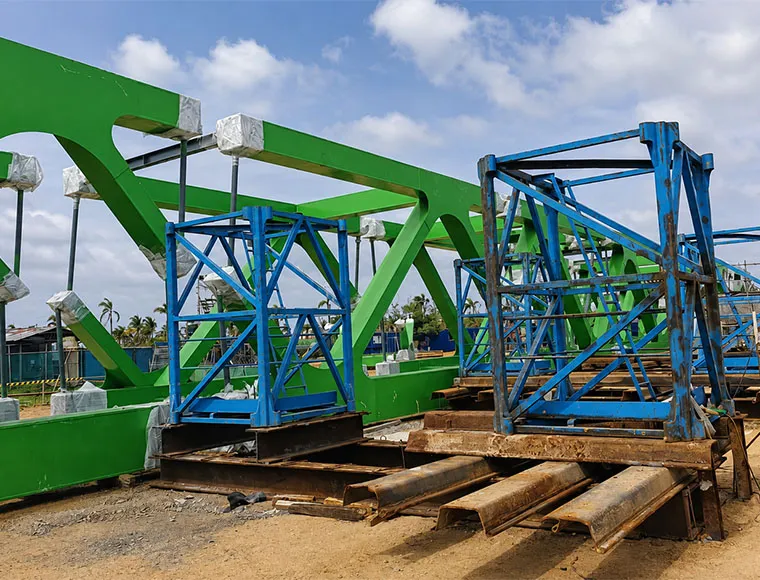
Una Interpretación Errónea Común: “Modular” No Significa “Talla Única para Todos”
El error más frecuente en las consultas sobre puentes no tiene que ver con el grado del acero — es asumir que un sistema modular significa que un único módulo estándar se reutiliza en todos los proyectos. En la práctica, la luz, el ancho del tablero, la capacidad de carga y el detalle de las conexiones se diseñan por proyecto incluso cuando el método de fabricación y envío (módulos atornillados) se mantiene consistente. Solicitar “un puente modular” sin especificar la clase de carga y la aplicación es la manera más rápida de terminar con un diseño que tiene que ser rediseñado después de la cotización.
Certificación y Qué Cubre Realmente
El página de producto de puentes lista certificación ISO. Para contextualizar qué significa esa designación en la práctica: ISO define su estándar de gestión de calidad como ISO 9001, su estándar de gestión ambiental como ISO 14001, y su estándar de salud y seguridad ocupacional como ISO 45001 — los tres sistemas que la mayoría de los fabricantes mencionan cuando citan “ISO” en general. Los compradores que abastecen para jurisdicciones que requieren certificación específica para acero estructural (como EN 1090 en Europa) deben confirmar qué estándar específico se aplica a un pedido de puente, ya que la certificación de sistemas de gestión ISO y la certificación estructural a nivel de producto no son lo mismo.
Preguntas frecuentes
P: ¿Cuál es la diferencia entre un puente de vigas de placa y un puente de viga cajón?
R: Una viga de placa utiliza un alma abierta de placas soldadas; una viga cajón cierra la sección formando un tubo resistente a la torsión. Las vigas cajón soportan mejor las cargas desiguales o descentradas, lo cual es importante en trazados curvos o tableros mixtos para vehículos y peatones.
P: ¿Se puede reubicar un puente modular de acero después de su instalación?
R: La construcción atornillada facilita el desmontaje y la reubicación en comparación con las estructuras soldadas en campo, por lo que las configuraciones de celosía y de vigas de placa son opciones habituales para proyectos de acceso temporal. Las vigas cajón se utilizan con menor frecuencia para este fin debido a la complejidad de su fabricación.
P: ¿Qué información necesita KXD para cotizar un puente modular de acero?
P: Tipo de aplicación (carretera, peatonal, minería, acceso temporal, etc.), luz y ancho de tablero requeridos, clase de carga esperada y condiciones de acceso al sitio para entrega e izado. El precio se encuentra en el rango de USD 40–100/m² dependiendo de cómo se resuelvan esas especificaciones.
P: ¿Se publica una vida útil de diseño para este producto de puente?
R: No en la página de producto actual. Los compradores deben solicitar una cifra de vida útil específica del proyecto en lugar de asumir que coincide con la vida útil de diseño de la línea de edificios de KXD, ya que la carga por fatiga de puentes difiere de las cargas estáticas de edificios.
La selección del puente se reduce en última instancia a hacer coincidir el tipo estructural con la forma en que se carga el cruce y qué tan rápido necesita abrirse — vale la pena trabajarlo con números reales de luz y carga antes de que la configuración quede fijada.



 2 de septiembre de 2026