KXD Steel Technical & Project Team | Qingdao KXD Steel Structure Co., Ltd. | Published: November 2, 2026
KXD’s published price for a avícola de estructura de acero ligero is USD 40–100 per square meter, depending on specifications. That figure covers the building. Feeding, drinking, manure removal, ventilation and other environmental systems, plus foundations, freight and import costs, need separate quotes, so the full project cost runs higher than the per-m² number alone.
The Number: USD 40–100/m², and What It Scales With
The per-m² price is a building-structure figure. Multiply it by floor area and you get the steel house, not the working farm. The table below shows what the published range means at three building sizes, starting from KXD’s 600 m² minimum order.
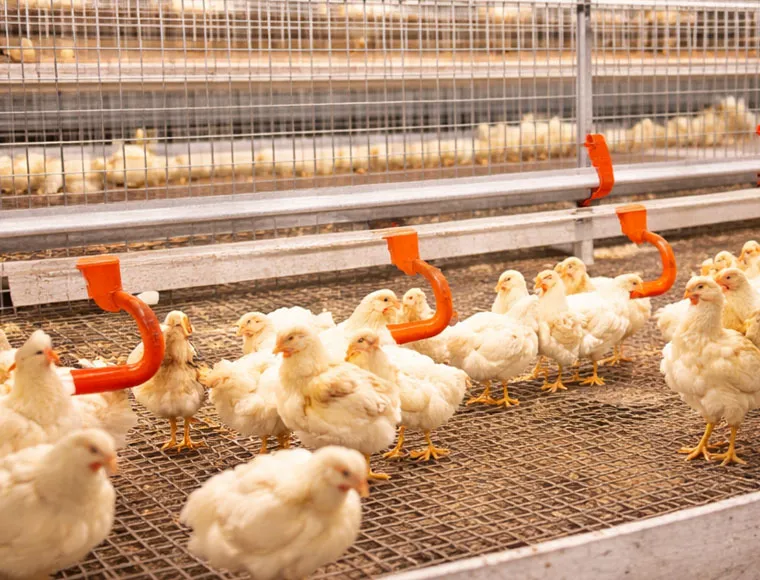
Table 1. Structure budget at KXD’s published range (USD 40–100/m²)
| Building area |
Low end (USD 40/m²) |
High end (USD 100/m²) |
Spread between ends |
| 600 m² (MOQ) |
USD 24,000 |
USD 60,000 |
USD 36,000 |
| 1,200 m² |
USD 48,000 |
USD 120,000 |
USD 72,000 |
| 2,400 m² |
USD 96,000 |
USD 240,000 |
USD 144,000 |
Source: KXD Gallinero con estructura de acero product page, price “USD 40–100/m², depending on specifications.” Calculations are straight multiplication; no volume discount is assumed because none is published.
Look at the last column. On a 2,400 m² house, the gap between the cheapest and most expensive specification is larger than the entire low-end budget for a 1,200 m² house. That is why a single per-m² number, without the specification behind it, tells you very little.
What Sits Inside the Per-m² Price, and What Doesn’t
KXD’s poultry house page lists feeding, nipple drinking, manure removal, cooling, ventilation, lighting and environmental-control systems as available. Treat each of them as a separate line item until a quote explicitly states otherwise. The same goes for anything built in the ground or moved across a border.
Table 2. Whole-project cost map for a steel poultry house
| Cost component |
Where it belongs |
Published price |
| Steel main frame (columns, rafters, bracing) |
Structure price |
Within USD 40–100/m² |
| Revestimiento de techos y paredes |
Structure price, spec-dependent |
Within USD 40–100/m² |
| Insulation panels |
Structure price, spec-dependent |
Within USD 40–100/m² (confirm panel type) |
| Slatted floor (1,200 × 500 × 40 mm) |
Optional item |
Quote required |
| Feeding system |
Equipment |
Quote required |
| Nipple drinking system |
Equipment |
Quote required |
| Manure removal system |
Equipment |
Quote required |
| Ventilation and cooling |
Equipment |
Quote required |
| Lighting and environmental control |
Equipment |
Quote required |
| Foundations and site civil work |
Local contractor |
Quote required (local) |
| Ocean freight and inland transport |
Logistics |
Quote required |
| Import duties and local taxes |
Buyer’s country |
Depends on destination rules |
| On-site erection labor |
Erection support / local crew |
Quote required |
Twelve of thirteen rows say “quote required” or depend on local rules. We are not going to fill those cells with guesses. What the table does give you is a checklist: if a supplier quote is silent on any row, that cost has not disappeared, it has been left for you to find later.
Why Two Quotes for the Same House Can Sit 2.5× Apart
USD 100 is 2.5 times USD 40. Inside one supplier’s published range, the drivers below are what move a project from one end toward the other. None of them is a markup; each changes how much material or processing the building needs.
- Clear span and eave height. A wider house without interior columns needs deeper rafters and heavier frames, which adds steel tonnage per square meter.
- Site wind and snow loads. A house designed for a coastal or high-snow site carries more steel than one designed for a sheltered inland plot. Ask what design loads the quote assumes.
- Enclosure and insulation. KXD’s steel building line offers single-skin steel, EPS, PU, rock wool and glass wool cladding. For a climate-controlled broiler or layer house, panel type and thickness change both the price and how hard the ventilation system has to work.
- Surface protection. Poultry houses hold humid, ammonia-laden air. Painted versus hot-dip galvanized steel (both offered across KXD projects) is a real cost difference, and it decides how the frame ages.
- Openings and fittings. Doors, fan openings, cooling-pad openings and windows each interrupt the wall system and add framing.
Optional slatted floor. Adding slats moves cost from the “equipment” pile onto the structure quote.
A lower quote is not automatically a worse building. It may simply be designed for a milder site. The problem starts when two buyers compare those numbers as if they described the same house.
KXDF-01 Steel Structure Poultry House: Published Specifications
These are the parameters KXD lists for its poultry house line (model KXDF-01 as currently shown on the product page).
Table 3. KXDF-01 published parameters
| Parámetro |
Valor publicado |
| Poultry types |
Broilers, layers, breeders and other poultry |
| Reference capacity |
10,000–50,000 birds per house |
| Optional slatted floor size |
1,200 × 500 × 40 mm |
| Slat hole options |
16 × 16 mm / 20 × 26 mm |
| Listed slat service life |
Más de 10 años |
| Available systems |
Feeding, nipple drinking, manure removal, cooling, ventilation, lighting, environmental control |
| Pedido mínimo |
600 m² |
| Precio |
USD 40–100/m², según especificaciones |
| Certification on product table |
ISO |
Two practical readings of this table. First, the 10,000–50,000 bird range is wide; where your project lands depends on stocking density for your bird type and local welfare rules, which the house design must be sized against. Second, the 600 m² minimum means this product is built for commercial operations, not small backyard flocks.
On quality systems, KXD’s wider manufacturing pages reference CE (EN 1090) and the ISO 9001, ISO 14001 and ISO 45001 management systems. According to ISO, ISO 9001 is the standard for quality management systems, ISO 14001 for environmental management systems, and ISO 45001 for occupational health and safety management systems. These certify how the factory runs, not the design of your particular house, which still has to be checked against local codes.
Build a Whole-Project Budget in 6 Steps
- Fix the floor area. Start from your target flock size and the stocking density your bird type and local regulations allow. Confirm the area meets the 600 m² minimum.
- Price the structure band. Multiply the area by USD 40 and USD 100 to set your structure range (Table 1). Write both numbers down; do not average them.
- Send a site brief before asking for a price. Include location, design wind speed or snow load if known, climate, bird type and whether the house will be fully enclosed or curtain-sided. Without this, any quote is a placeholder.
- Request equipment as separate lines. Ask for feeding, drinking, manure removal, ventilation/cooling and lighting/control priced individually, so you can compare them against local equipment suppliers.
- Get local quotes for everything in the ground. Foundations, floor slab, drainage, utilities and permits are priced by contractors in your country. Ask the steel supplier for anchor bolt layouts and column reactions so those quotes are accurate.
- Add logistics and import costs last. Request a freight quote to your port, then add inland transport, duties and taxes under your country’s rules. Check the budget is complete by walking every row of Table 2.
You know step 6 is done when every row in Table 2 has either a number or a written reason why it does not apply.
Common Mistake: Comparing Prices Measured on Different Areas
“Per square meter” sounds standard. It isn’t. One supplier may calculate on enclosed floor area, another on the roof’s projected area including eave overhangs, and a third on the building footprint measured to the outer face of the wall panels. On a long, narrow poultry house, those differences add up across hundreds of square meters.
Before comparing any two quotes, ask each supplier three things in writing: which area the price is measured on, which design loads the frame is built for, and which items from Table 2 are included. If the answers differ, normalize the quotes before deciding which is cheaper.
Trade-offs of a Steel Structure Chicken House
Compared with the tiered per-m² listings common on B2B marketplaces, an itemized quote takes longer to obtain, but it is the only format that lets you see where the money in a steel poultry house actually goes.
Where steel makes sense:
- Frames are fabricated in a factory and bolted together on site, so site work focuses on foundations and assembly.
- One supplier can quote the structure alongside the listed equipment systems, which reduces the number of interfaces you manage.
- Clear-span frames leave the floor open for feeder lines, drinker lines and manure belts.
Where it costs you:
- The per-m² price is only part of the budget. Equipment, civil work and freight can’t be estimated from it, and a buyer who budgets on the structure figure alone will run short.
- The 600 m² minimum rules out small farms.
- Shipping from China adds ocean freight time and import paperwork to your schedule, which matters if you are timing the build around a flock placement date.
- Ammonia and humidity attack unprotected steel. Skimping on surface treatment to reach the low end of the range shortens frame life in exactly the environment where it is hardest to repaint.
Preguntas frecuentes
Q: How much does a commercial chicken house cost per square meter?
A: KXD publishes USD 40–100/m² for its steel structure poultry house, depending on specifications. This prices the building structure. Equipment, foundations, freight and import costs are additional and need separate quotes.
Q: Does the per-m² price include ventilation and feeding equipment?
A: Treat them as separate. KXD lists feeding, nipple drinking, manure removal, cooling, ventilation, lighting and environmental-control systems as available options, so request each as its own line item.
Q: What is the minimum order for a steel poultry house?
A: 600 m² for KXD’s Steel Structure Poultry House.
Q: How many birds does one house hold?
A: KXD’s reference capacity is 10,000–50,000 birds per house. The actual number depends on bird type, stocking density and local welfare regulations.
Q: Why do steel chicken house quotes vary so much?
A: Span, eave height, site wind and snow loads, insulation type, surface protection and openings all change the amount of steel and processing. Quotes measured on different area definitions also look further apart than they are.
Q: Can I get a total project price without sending site details?
A: Not a reliable one. Design loads, climate and enclosure type change the structure itself, and foundations and freight depend on your location. A site brief is what turns a price range into a quote.
Q: How long do the slatted floors last?
A: KXD lists a service life of more than 10 years for its optional slatted floor (1,200 × 500 × 40 mm, with 16 × 16 mm or 20 × 26 mm hole options).



 2 de noviembre de 2026