Equipe Técnica e de Projetos de Aço da KXD | Grupo de Engenharia de Estruturas de Aço | Publicado em 2 de setembro de 2026
A ponte modular de aço é uma estrutura pré-fabricada enviada em seções parafusadas, em vez de ser concretada ou soldada no local. A configuração adequada — treliça, viga de alma cheia ou viga-caixão soldada — depende menos apenas do vão do que de como a travessia será carregada, acessada e montada.
Três Tipos Estruturais, Três Funções Diferentes
Nem toda treliça de aço tem a mesma aparência quando se vai além das fotos de marketing, e as três configurações fabricadas pela KXD resolvem problemas diferentes.
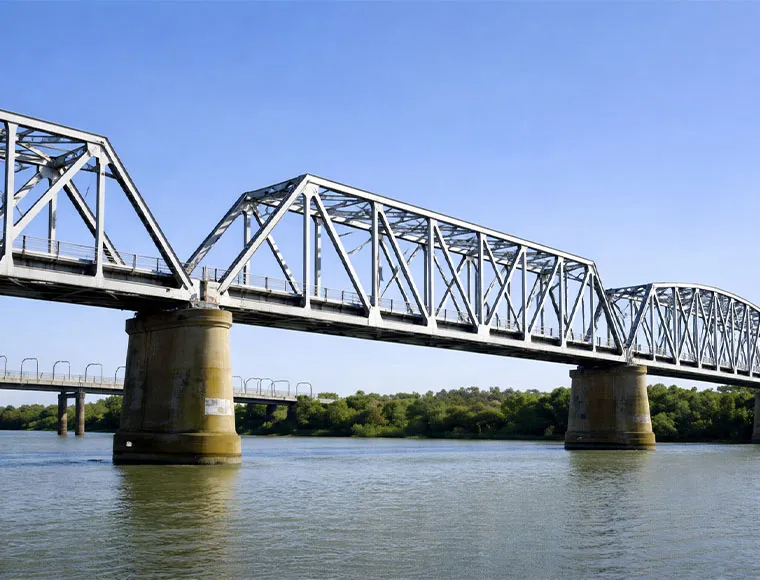
As pontes de treliça de aço usam elementos triangulados para suportar as cargas, o que reduz o peso do aço em relação ao vão. Elas são adequadas para travessias rodoviárias e ferroviárias em que um vão longo sem apoio intermediário é inevitável e em que o projeto com trama aberta também facilita as inspeções posteriores.
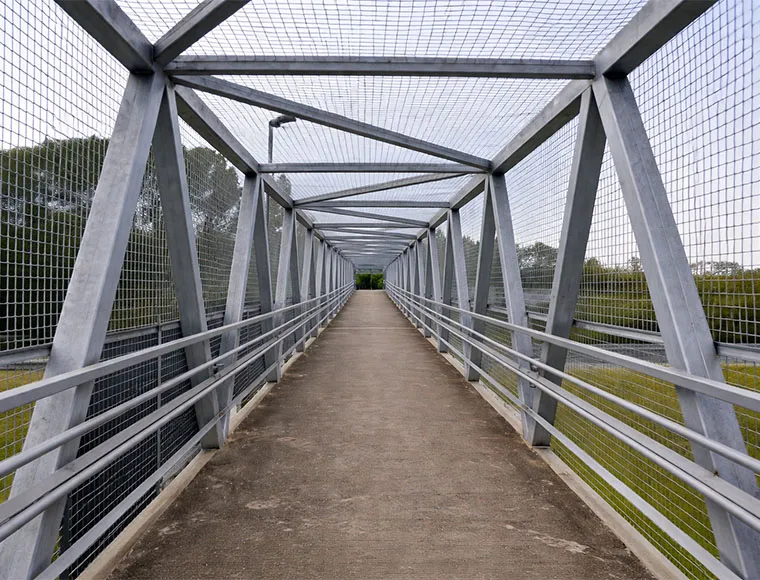
As pontes de vigas de alma cheia usam chapas sólidas soldadas em vez de uma trama triangulada. Elas custam menos para fabricar em vãos curtos e médios, e seu intradorso plano facilita o trabalho quando o espaço livre abaixo do tabuleiro é limitado, como em uma passarela sobre uma via, por exemplo.
As pontes de vigas-caixão soldadas fecham a seção, formando uma caixa resistente à torção. Essa rigidez torsional é mais importante quando a ponte estará sujeita a carregamentos irregulares ou excêntricos, como em rotas de transporte de mineração, viadutos urbanos curvos ou travessias que conduzem tanto veículos quanto pedestres em um tabuleiro assimétrico.
Nenhuma das três é universalmente “melhor”. Uma viga de alma cheia especificada para uma estrada de transporte de mineração com empilhadeiras aplicando cargas laterais sofrerá mais torção do que uma viga-caixão; uma viga-caixão especificada para uma passarela curta para pedestres normalmente representa um custo adicional por uma rigidez de que ninguém precisa.
Onde Cada Configuração É Utilizada
As aplicações publicadas pela KXD para esta linha de produtos abrangem projetos rodoviários, ferroviários, de travessias de pedestres, industriais, de mineração, de acesso temporário e de viadutos urbanos. Na prática, a correspondência entre o tipo de estrutura e o caso de uso é a seguinte:
1. Travessias rodoviárias e ferroviárias — configuração em treliça para vãos livres longos com carregamento previsível e centrado.
2. Viadutos para pedestres e travessias urbanas leves — viga de alma cheia, priorizando um custo de fabricação mais baixo e uma pequena altura do tabuleiro.
3. Rotas de transporte pesado em áreas de mineração e industriais — viga-caixão, onde o carregamento torsional causado por equipamentos pesados é rotineiro, e não ocasional.
4. Pontes de acesso temporário — treliça ou viga de alma cheia, escolhida principalmente pela rapidez com que os módulos podem ser unidos por parafusos e pela facilidade de realocação.
Os projetos de acesso temporário merecem uma observação à parte: o fator decisivo raramente é a capacidade de carga. É o número de ligações aparafusadas que uma equipe precisa fazer antes de a plataforma ser liberada ao tráfego, o que é mais uma questão de cronograma do que de engenharia.
Comparação entre tipos em resumo
| Fator |
Ponte treliçada |
Ponte de vigas de alma cheia |
Viga-caixão soldada |
| Uso típico |
Rodovias, ferrovias, grandes vãos |
Passarelas para pedestres, vãos curtos a médios |
Mineração, aplicações industriais, cargas curvas/assimétricas |
| Caminho de carga |
Membros triangulados |
Alma soldada maciça |
Caixão fechado resistente à torção |
| Rigidez torcional |
Moderada |
Inferior |
Mais alta |
| Complexidade de fabricação |
Maior (mais soldas/ligações) |
Inferior |
Maior (soldagem de seção fechada) |
| Folga do deck |
Mais profundidade necessária |
Forro raso |
Moderada |
| Melhor opção para projetos temporários/relocáveis |
Sim |
Sim |
Menos comum |
Em comparação com os comunicados de imprensa dos fabricantes e a linguagem de pedidos de patente que dominam a maioria dos resultados de pesquisa sobre este tema, esta tabela pretende responder a uma pergunta mais específica: qual configuração se adequa a uma determinada condição de carga e acesso, não qual marca construiu a ponte mais alta no último ano.
Construção Modular: O que o Sistema “Aparafusado” Realmente Muda no Local
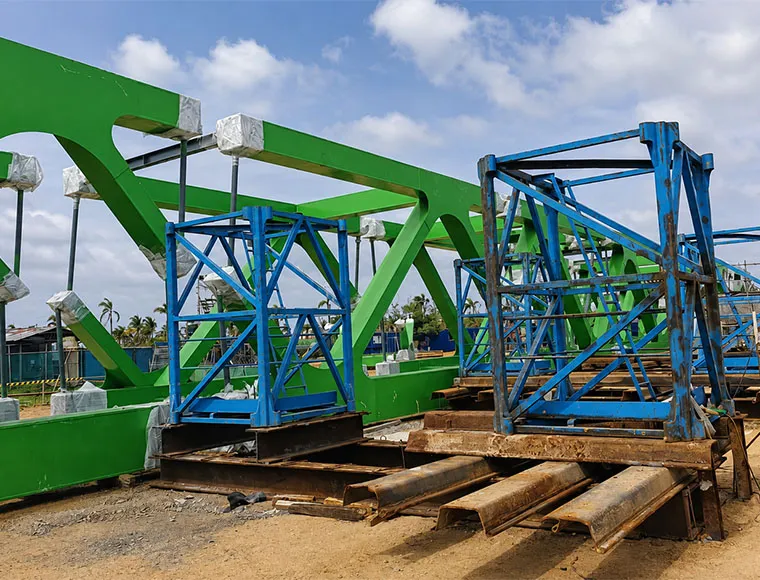
O parâmetro que mais afeta um cronograma de construção não é o vão nem o grau do aço — é se a ponte é soldada em campo ou modular aparafusada. A Ponte de Aço Pré-fabricada da KXD (Ponte Modular de Aço, modelo KXDF-01) é fabricado e pré-montado na oficina, depois enviado em seções que são aparafusadas no local.
Isso transfere o trabalho de caminho crítico do campo para a fábrica:
- As seções são cortadas, soldadas e pré-furadas para se encaixarem na oficina, onde as tolerâncias são controladas e o retrabalho é barato de identificar.
- Os módulos são enviados ao local como unidades discretas e içáveis, em vez de chapas e vigas brutas.
- As equipes aparafusam as conexões em sequência em vez de executar soldas de campo, o que reduz o número de operações dependentes do clima.
- A inspeção se concentra no torque dos parafusos e no alinhamento, em vez das verificações da qualidade das soldas, que exigem inspetores de soldagem certificados no local.
A desvantagem é que as conexões parafusadas exigem tolerâncias de fabricação mais rigorosas desde o início — um erro de oficina que seria rapidamente corrigido com uma solda em campo se transforma em uma peça enviada que não se alinha. Essa é uma limitação real que merece ser considerada no planejamento, não uma simples nota de rodapé.
Onde Este Produto Se Enquadra em Termos de Vão e Tamanho do Pedido
Os parâmetros publicados pela KXD para esta linha são mais restritos do que os de seus produtos para edificações, e vale dizer isso claramente, em vez de tentar encobrir o fato com adjetivos:
- Configurações oferecidas: treliça de aço, viga de chapas e viga-caixão soldada — todas disponíveis em formato modular/pré-fabricado.
- Quantidade mínima de pedido: 600 m².
- Capacidade de fornecimento publicada para esta categoria de produto: 8.000 toneladas/mês.
- Certificação listada na página do produto: ISO.
- Faixa de preço: USD 40–100/m², dependendo da especificação.
Duas informações não são publicadas para esta linha específica e não devem ser presumidas tomando emprestado números do catálogo de edifícios da KXD: um valor explícito de vão livre e uma vida útil de projeto declarada. Compradores comparando isso com estruturas de aço de grau construtivo devem solicitar valores específicos de vão e vida útil para o projeto, em vez de presumir que a vida útil de projeto de 50 anos da linha de edifícios se aplica — carregamento de pontes e ciclos de fadiga são um problema de engenharia diferente.
Um Erro Comum de Interpretação: “Modular” Não Significa “Tamanho Único”
O erro mais frequente nas consultas sobre pontes não tem a ver com o grau do aço — é assumir que um sistema modular significa que um único módulo padrão é reutilizado em todos os projetos. Na prática, o vão, a largura do tabuleiro, a capacidade de carga e o detalhamento das ligações são projetados especificamente para cada projeto, mesmo quando o método de fabricação e transporte (módulos aparafusados) permanece o mesmo. Encomendar “uma ponte modular” sem especificar a classe de carga e a aplicação é a forma mais rápida de acabar com um projeto que precisa ser reengenhado depois da cotação.
Certificação e o Que Ela Realmente Abrange
A página do produto de pontes lista a certificação ISO. Para dar contexto sobre o que essa designação significa na prática: a ISO define sua norma de gestão da qualidade como ISO 9001, sua norma de gestão ambiental como ISO 14001 e sua norma de saúde e segurança ocupacional como ISO 45001 — os três sistemas mais referenciados pelos fabricantes quando citam “ISO” de forma genérica. Compradores que fornecem para jurisdições que exigem certificação específica para aço estrutural (como a EN 1090 na Europa) devem confirmar qual norma específica se aplica a um pedido de ponte, já que a certificação de sistema de gestão ISO e a certificação estrutural em nível de produto não são a mesma coisa.
Perguntas frequentes
P: Qual é a diferença entre uma ponte de viga de placas e uma ponte de viga caixão?
R: Uma viga de alma cheia usa uma alma aberta de chapas soldadas; uma viga caixão fecha a seção em um tubo resistente à torção. As vigas caixão suportam melhor cargas desiguais ou descentralizadas, o que é importante para rotas curvas ou tabuleiros mistos de veículos/pedestres.
P: Uma ponte metálica modular pode ser realocada após a instalação?
R: A construção aparafusada torna a desmontagem e a realocação mais práticas do que estruturas soldadas no local, motivo pelo qual as configurações de treliça e viga de alma cheia são escolhas comuns para projetos de acesso temporário. As vigas caixão são usadas com menos frequência para esse fim devido à complexidade de fabricação.
P: Quais informações a KXD precisa para cotar uma ponte metálica modular?
R: Tipo de aplicação (estrada, pedestres, mineração, acesso temporário, etc.), vão e largura de tabuleiro necessários, classe de carga esperada e condições de acesso ao local para entrega e içamento. O preço fica na faixa de USD 40–100/m², dependendo de como essas especificações se definem.
P: Existe uma vida útil de projeto publicada para este produto de ponte?
R: Não na página de produto atual. Os compradores devem solicitar um valor de vida útil específico do projeto em vez de assumir que corresponde à vida útil de projeto da linha de edifícios da KXD, pois o carregamento por fadiga de pontes difere das cargas estáticas de edifícios.
A seleção de pontes, em última análise, se resume a combinar o tipo estrutural com a forma como a travessia é carregada e a rapidez com que precisa ser aberta — vale a pena trabalhar com números reais de vão e carga antes que a configuração seja definida.



 2 de setembro de 2026