Équipe technique et projets de KXD | Groupe d’ingénierie des structures en acier | Publié le 3 septembre 2026
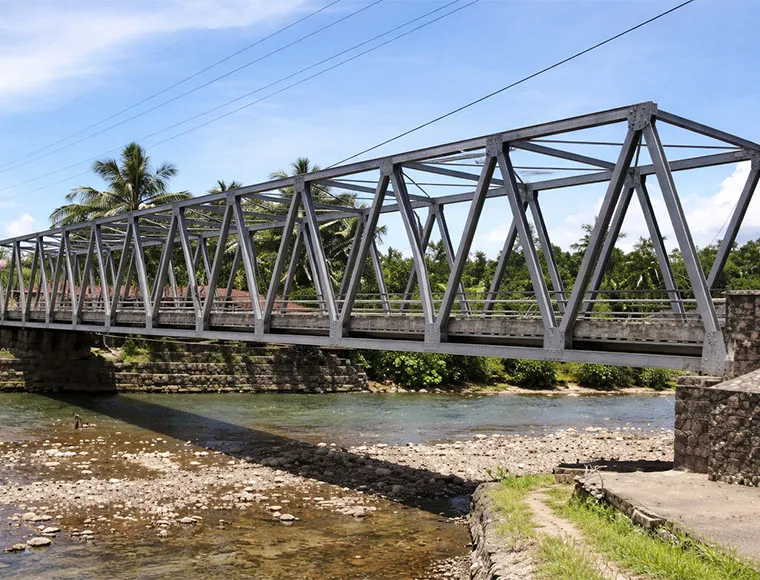
Un pont piétonnier à treillis en acier préfabriqué est une structure fabriquée en usine et assemblée par boulonnage, dont les dimensions sont adaptées à chaque franchissement plutôt que vendue selon un tableau fixe de dimensions. La largeur du tablier, la portée et la longueur des segments destinés au transport sont définies par l’ingénierie de chaque projet ; ce qui est standardisé d’une commande à l’autre, c’est l’approche structurelle, la quantité minimale de commande et la certification.
Pourquoi ce produit ne dispose pas d’une fiche technique universelle
Les documents de projets municipaux et les articles universitaires consacrés aux matériaux de tablier publient chacun des chiffres pour un pont donné : une passerelle nommément désignée, avec sa propre portée, sa propre largeur de tablier et son propre plan d’expédition. Aucun de ces documents ne regroupe ces données dans un tableau de sélection qu’un acheteur pourrait utiliser avant le cadrage d’un projet, pas plus que la fiche technique d’un fournisseur donné, car les ponts piétonniers à poutres treillis ne sont pas fabriqués selon une dimension de catalogue, comme le serait une poutre en I standard. La portée, la largeur et la capacité de charge sont calculées en fonction du franchissement concerné, des conditions de fondation et de la juridiction applicable en matière de normes.
C’est une situation différente de celle des produits de construction de KXD, pour lesquels l’entreprise publie une plage de portées fixe (jusqu’à 100 m) pour les bâtiments à structure métallique standard. Pour la Pont préfabriqué en acier / gamme Modular Steel Bridge (modèle KXDF-01), les informations produit publiées portent sur la configuration structurelle et les paramètres de commande plutôt que sur un tableau numérique des portées — une distinction qu’il vaut mieux énoncer clairement plutôt que de brouiller les deux gammes de produits.

Ce qui est effectivement publié pour ce produit
| Paramètre |
Détail publié |
| Configurations structurelles proposées |
Treillis métallique, poutre à âme pleine, poutre-caisson soudée |
| Méthode de construction |
Modulaire / préfabriqué, assemblage sur site par boulonnage |
| Applications |
Autoroutes, voies ferrées, voies piétonnes, sites industriels, sites miniers, accès provisoires, viaducs urbains |
| Quantité minimale de commande |
600 m² |
| Capacité d'approvisionnement mensuelle (gamme de produits) |
8 000 tonnes |
| Certification indiquée sur la page du produit |
ISO |
| Fourchette de prix |
40–100 USD/m², selon les spécifications |
| Chiffres spécifiques de portée libre |
Non publié — conçu sur mesure pour chaque projet |
| Normes de largeur de tablier |
Non publié — conçu sur mesure pour chaque projet |
| Limites de longueur des segments d'expédition |
Non publié — dépend de l'itinéraire et du mode de transport |
Trois lignes de ce tableau indiquent “ non publié ” plutôt qu’un chiffre, et c’est intentionnel. Les remplir avec des valeurs plausibles fausserait ce que KXD a réellement divulgué pour cette gamme de produits spécifique, même si de telles valeurs existent de manière informelle pour les bâtiments et sont demandées pour les ponts lors des devis.
Comment la configuration du treillis influence les décisions de portée
Même en l’absence d’un tableau de portées fixe, la logique structurelle qui régit les ponts piétonniers à treillis est cohérente dans l’ensemble du secteur et mérite d’être détaillée :
- Les éléments triangulés reprennent les charges plus efficacement qu’une âme pleine sur les longues portées, ce qui explique pourquoi la configuration en treillis est généralement retenue par défaut dès qu’une passerelle doit franchir une route, une voie ferrée ou une voie navigable, plutôt qu’un simple petit espace.
- La largeur du tablier dépend du volume prévu de piétons et de cyclistes, et non de la portée du treillis elle-même : une large voie polyvalente doit avoir un tablier plus large qu’une passerelle étroite à passage en file indienne, quelle que soit sa portée.
- La longueur des segments d’expédition est déterminée par les contraintes de l’itinéraire, et non par une dimension de fabrication idéale. Un pont en treillis qui pourrait être expédié en deux longs modules devra peut-être être divisé en trois ou quatre segments plus courts si l’itinéraire de livraison comporte des virages serrés, des ponts bas ou des routes soumises à des restrictions de poids.
- La conception des fondations et des culées varie en fonction de la portée et des conditions du sol sur le site, ce qui explique notamment pourquoi un tableau fixe reliant portée et prix ne reste pas valable d’un projet à l’autre.
C’est également là que se produit le contresens le plus fréquent : considérer “ préfabriqué ” comme synonyme de “ dimensions standardisées ”. La préfabrication décrit la manière dont le pont est construit (fabriqué en atelier, expédié sous forme de modules, boulonné sur site), et non le fait que chaque commande reprenne une portée ou une largeur issue d’un catalogue.
Applications pour lesquelles cette configuration est spécifiée
Passages pour piétons au-dessus de routes ou de voies ferrées — le principal cas d’utilisation des configurations en treillis dans les projets de passerelles, choisies pour leur efficacité en matière de portée par rapport à une poutre à âme pleine.
- Voies multifonctionnelles (piétons et cyclistes) — la largeur du tablier devient davantage le paramètre déterminant que la portée.
- Accès piétonnier temporaire ou déplaçable — l’assemblage boulonné permet de démonter et de déplacer la structure si le franchissement est de courte durée.
- Passerelles urbaines mixtes pour véhicules et piétons — parfois associées à des sections en caisson lorsque les charges de torsion dues à la circulation mixte constituent un facteur déterminant.
FAQ
Q : Quelle portée un pont piétonnier en treillis d'acier préfabriqué peut-il couvrir ?
R : KXD ne publie pas de tableau de portée fixe pour ce produit ; la portée est calculée pour chaque franchissement en fonction des conditions du site et des exigences de charge, et est confirmée pendant le processus de devis.
Q : Quelle est la quantité minimale de commande ?
R : 600 m², la même MOQ publiée sur l'ensemble de la gamme de produits de ponts de KXD.
Q : Une portée plus longue coûte-t-elle proportionnellement plus cher par mètre carré ?
R : Les prix se situent dans la fourchette de 40 à 100 USD/m² selon les spécifications, mais la portée n'est pas le seul facteur déterminant — la largeur du tablier, la classe de charge et les conditions du site/des fondations influencent tous où un projet se situe dans cette fourchette.
Q : Le pont peut-il être expédié en une seule pièce ?
R : Généralement pas. Les sections modulaires sont dimensionnées en fonction des contraintes de l'itinéraire (virages, gabarit, limites de poids) autant que de la commodité de fabrication, si bien que le nombre de segments dépend généralement de l'itinéraire de livraison, et non d'une norme d'expédition fixe.
Les acheteurs qui comparent des options de ponts-passerelles à treillis devraient considérer les chiffres de portée et de largeur publiés pour d'autres projets comme des points de référence, et non comme un menu — les chiffres qui comptent sont ceux qui découlent d'une véritable étude du site et des charges.



 3 septembre 2026