Una planificación deficiente de hangares para aeronaves puede desperdiciar espacio, ralentizar las operaciones de aviación y exponer aeronaves valiosas a daños por condiciones climáticas. Cuando la abertura de la puerta, el claro libre, la altura de alero y el diseño del edificio de acero no coinciden con la aeronave, los problemas aparecen rápidamente. Un hangar de acero personalizado para aeronaves ayuda a resolver estos problemas desde el principio.
A hangar de acero para aeronaves es un edificio de acero preingeniado diseñado para almacenamiento de aeronaves, mantenimiento, operaciones de aviación y protección. Utiliza una estructura de acero, marco de claro libre, sistema de puerta ancha para hangar, paneles de techo y pared, y sistemas de edificación ingeniados para acomodar varios tamaños de aeronaves y apoyar necesidades de aviación a largo plazo.
¿Qué es un hangar de acero para aeronaves?
Un hangar para aeronaves es un edificio utilizado para almacenamiento de aeronaves, protección, mantenimiento, inspección y apoyo de aviación. Puede servir a propietarios de aeronaves privadas, operadores de aeropuertos, escuelas de vuelo, equipos de aviación corporativa, empresas de mantenimiento, operadores de helicópteros e instalaciones de aviación.
Un hangar de aviones de acero utiliza una estructura de acero como sistema de soporte principal. El edificio generalmente incluye estructura de acero, columnas, vigas de techo, correas, largueros de pared, arriostramientos, paneles de techo, revestimiento de paredes, tragaluces, ventilación, puertas y un sistema de puerta grande para aviones. La estructura debe proporcionar suficiente espacio para el movimiento de aeronaves y almacenamiento seguro.
A diferencia de los edificios de almacenamiento ordinarios, los edificios de hangar deben enfocarse en la apertura clara, tamaños de aeronaves, espacio de giro, altura de cola, envergadura de alas, zonas de mantenimiento y seguridad de acceso. Un hangar de aviones metálico no es solo una caja metálica. Es un espacio planificado de almacenamiento y operación de aviación.
¿Por qué elegir un edificio de acero para la construcción de hangares de aviones?
Muchos compradores de aviación eligen un edificio de acero para la construcción de hangares de aviones porque el acero puede crear espacios fuertes, amplios y prácticos. Las aeronaves a menudo necesitan espacio interior sin obstrucciones, y una estructura de acero puede reducir las columnas interiores mientras mantiene la estabilidad del edificio.
Un edificio de acero también es adecuado para diseño preingeniado. Los principales elementos de acero pueden ser diseñados, fabricados, marcados, empacados y enviados antes de que comience el trabajo en sitio. Esto favorece una construcción de edificios de acero más rápida y una instalación más fácil en comparación con algunos métodos tradicionales.
Para hangares privados y corporativos, la planificación rentable es importante. Para instalaciones de aviación comercial, la seguridad y el flujo de trabajo importan aún más. Un hangar de acero para aeronaves puede equilibrar espacio, resistencia, velocidad de construcción, personalización y protección a largo plazo cuando se diseña correctamente.
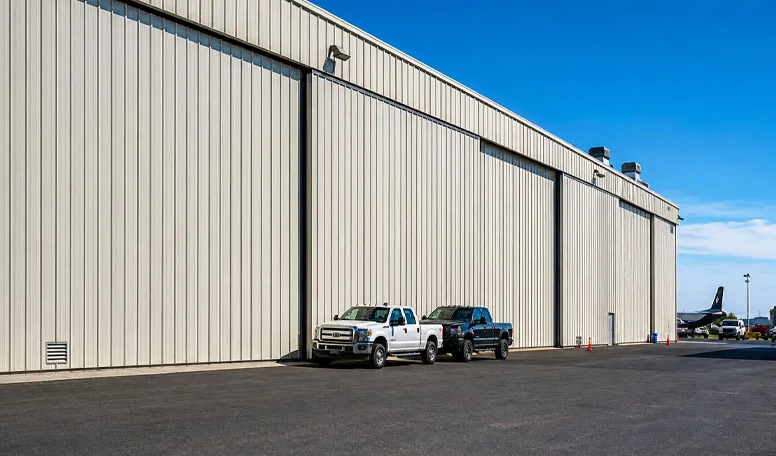
¿Cómo mejora el diseño de luz libre el movimiento de aeronaves?
La luz libre es una de las ideas más importantes en un hangar de aeronaves. Una estructura de acero de luz libre permite que el espacio interior permanezca abierto sin columnas interiores innecesarias. Esto ayuda a que las aeronaves entren y salgan con mayor seguridad y brinda a los operadores más espacio para equipos de servicio.
El movimiento de aeronaves es diferente al movimiento de montacargas en almacenes. Las aeronaves necesitan amplio espacio de giro, espacio libre para las alas, espacio libre para la cola y acceso seguro a las puertas. Si el hangar tiene demasiadas columnas interiores, puede limitar el movimiento y crear riesgo durante las operaciones de aviación diarias.
Un diseño de luz libre o espacio diáfano es especialmente útil cuando el hangar necesita almacenar múltiples aeronaves. El diseño puede planificarse para aviones pequeños, helicópteros, jets ejecutivos o tipos de aeronaves mixtos. La luz final debe diseñarse de acuerdo con el tamaño de la aeronave, el ancho del edificio y los códigos de construcción locales.
¿Qué sistema de puertas funciona mejor para un hangar de aeronaves?
El sistema de puertas es una de las partes más importantes de cualquier hangar de aviones. Una puerta industrial normal generalmente no es suficiente. Los hangares de aeronaves pueden necesitar puertas plegables anchas, puertas corredizas, puertas hidráulicas u otros sistemas de apertura grandes.
Una puerta plegable se utiliza a menudo para almacenamiento de aviación porque puede proporcionar una apertura amplia mientras ahorra espacio frontal. Las puertas corredizas pueden ser adecuadas para hangares grandes con suficiente espacio lateral. La mejor opción depende del tamaño del hangar, tipo de aeronave, presupuesto, clima, necesidades de mantenimiento y uso diario.
La puerta debe planificarse junto con la estructura de acero del edificio. El tamaño de la apertura, carga de viento, marco de soporte, sistema eléctrico, sistema de seguridad y drenaje deben considerarse desde el principio. Un buen sistema de puertas protege las aeronaves y también facilita una operación fluida.
¿Qué materiales se utilizan para los edificios de hangares de aeronaves metálicos?
El material para hangares de aeronaves generalmente incluye acero estructural, revestimiento de techo, revestimiento de paredes, correas, largueros, pernos, placas base, puertas, ventanas, aislamiento y sistemas de protección de superficie. Estas partes trabajan juntas como un solo sistema de edificio.
Un hangar de aeronaves metálico puede utilizar sistemas de edificios metálicos preconfigurados porque combinan marcos de acero primarios, estructuras secundarias y paneles metálicos para techo y paredes. El marco principal proporciona resistencia, mientras que los paneles metálicos exteriores protegen el interior de la lluvia, el viento, el polvo y la luz solar.
Para algunos proyectos, se puede agregar aislamiento para mejorar el confort y reducir el cambio de temperatura. Los paneles aislados pueden ser adecuados para espacios de mantenimiento, áreas de oficina o hangares en condiciones climáticas cálidas o frías. La elección final del material debe coincidir con las necesidades de almacenamiento de aeronaves, el clima local y las regulaciones de construcción.
¿Cómo Afectan la Altura del Alero, el Tamaño del Edificio y la Abertura Libre al Diseño del Hangar?
La altura del alero es muy importante en el diseño de hangares. El edificio debe ser lo suficientemente alto para la cola de la aeronave, el sistema de puertas, las luces, la estructura del techo y el espacio libre de mantenimiento. Si la altura del alero es demasiado baja, el hangar puede parecer aceptable en papel pero fallar en el uso real.
El tamaño del edificio también importa. Un hangar pequeño para aviones privados puede necesitar solo espacio para una aeronave y herramientas básicas. Una instalación de aviación más grande puede necesitar espacio para múltiples aeronaves, oficinas, repuestos, equipos de mantenimiento, áreas de lavado y vehículos de servicio.
La abertura libre es el ancho y altura útil de la puerta del hangar. Debe ajustarse a la aeronave de forma segura. Los compradores no solo deben proporcionar la longitud total de la aeronave. También deben proporcionar la envergadura, altura de cola, necesidades de despeje de puerta y espacio de operación. Esto ayuda al ingeniero a preparar un diseño práctico de hangar de acero para aeronaves.
¿Qué instalaciones de aviación pueden usar hangares de acero preingeniados?
Los hangares de acero preingeniados pueden servir a muchas instalaciones de aviación. Pueden usarse para almacenamiento de aeronaves privadas, departamentos de vuelo corporativo, edificios de apoyo aeroportuario, escuelas de entrenamiento de vuelo, talleres de mantenimiento, bases de helicópteros, almacenamiento de UAV y edificios de servicio aeroportuario.
Los hangares prefabricados para aeronaves también son útiles cuando los compradores necesitan una construcción más rápida y una gestión de proyecto más predecible. Los componentes de acero pueden prefabricarse antes de la entrega, lo que ayuda a reducir el trabajo en el sitio y hace que el proceso de instalación sea más organizado.
Las aplicaciones comunes incluyen:
| Aplicación en aviación |
Necesidad típica del edificio |
Enfoque de Diseño |
| Hangar de Aeronaves Privadas |
Almacenamiento para una o dos aeronaves |
Apertura despejada, bajo mantenimiento y almacenamiento seguro |
| Hangar Corporativo |
Jets de negocios y salas de apoyo |
Apariencia profesional, espacio de oficinas y puertas amplias |
| Hangar de Escuela de Vuelo |
Almacenamiento para aeronaves de entrenamiento |
Múltiples bahías y acceso conveniente |
| Hangar de Mantenimiento |
Servicio y reparación de aeronaves |
Espacio de luz libre, iluminación y áreas de equipamiento |
| Hangar de Helicópteros |
Almacenamiento de aeronaves de ala rotatoria |
Altura adecuada, acceso conveniente y movimiento seguro |
| Edificio de Apoyo Aeroportuario |
Almacenamiento de herramientas, piezas y equipo de servicio |
Almacenamiento eficiente y flujo de trabajo |
Los tipos de edificios adecuados dependen de las necesidades de aviación, los tipos de aeronaves, el tamaño del sitio y las normas de aprobación locales.
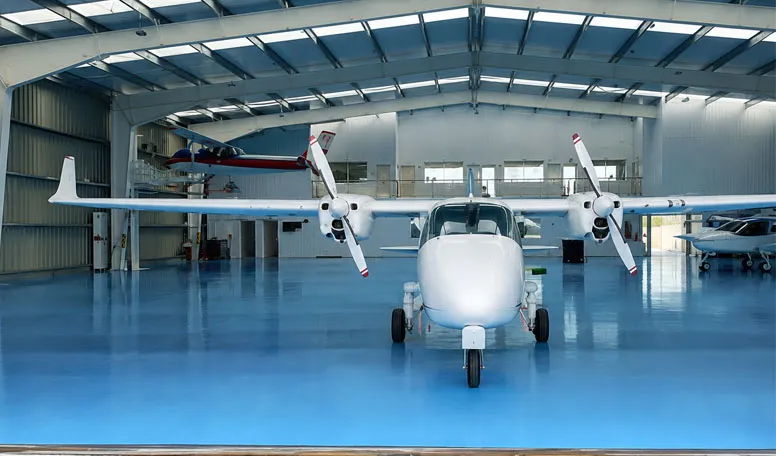
¿Cómo Pueden las Opciones de Personalización Adaptarse a Diferentes Tipos de Aeronaves?
Cada hangar de aeronaves debe comenzar con la aeronave. Un hangar para un avión ligero es diferente de un hangar para un jet ejecutivo. Un hangar para helicópteros es diferente también. Los hangar de acero para aeronaves edificios deben diseñarse en torno a la aeronave real y el uso diario.
Las opciones de personalización pueden incluir el tamaño del edificio, luz libre, altura de alero, pendiente del techo, altura de pared, sistema de puertas, tamaño de puerta plegable, aislamiento, tragaluces, ventilación, oficinas, cuartos de almacenamiento, áreas de mantenimiento y acabado exterior. El hangar también se puede planificar como un hangar metálico simple o como un edificio de soporte aeronáutico más completo.
Un diseño totalmente personalizable ayuda a proteger los activos valiosos del propietario. También mejora el flujo de trabajo. Cuando la aeronave, las herramientas, las personas y los vehículos tienen suficiente espacio, el hangar se convierte en un edificio más seguro y útil para el almacenamiento aeronáutico a largo plazo.
¿Qué deben verificar los compradores antes de iniciar un proyecto de construcción de hangar?
Antes de iniciar un proyecto de construcción, los compradores deben recopilar información básica. Este paso ahorra tiempo y reduce errores de diseño. Un hangar de aeronaves debe ajustarse tanto a la aeronave como al sitio.
Los compradores deben preparar:
- Tipo y cantidad de aeronaves
- Envergadura, longitud y altura de cola de la aeronave
- Ancho y altura de abertura libre requeridos
- Tamaño del edificio y distribución del sitio
- Preferencia de sistema de puertas
- Condiciones locales de viento, nieve y sísmicas
- Necesidades de aislamiento y ventilación
- Requisitos de oficina, almacenamiento o sala de mantenimiento
- Códigos de construcción locales y regulaciones aeroportuarias
- Destino de entrega y condiciones de instalación
Esta información ayuda al ingeniero a crear la estructura correcta, el marco, la abertura de la puerta y la distribución. También ayuda a evitar hangares subdimensionados, estructuras de costo excesivo y cambios posteriores.
¿Cómo Afecta la Protección Climática al Almacenamiento de Aeronaves?
El almacenamiento de aeronaves no se trata solo de mantener las aeronaves bajo techo. El hangar debe proporcionar protección superior contra la lluvia, el sol, el viento, el polvo, la nieve y las condiciones climáticas adversas. Una buena protección y almacenamiento pueden reducir la exposición diaria y facilitar el mantenimiento.
A hangar de acero para aeronaves pueden diseñarse con sistemas de techo y paredes sellados, drenaje adecuado, tratamiento de superficie resistente a la corrosión, opciones de paredes aisladas y ventilación apropiada. Estas opciones de diseño ayudan a crear un ambiente interior más seguro para aeronaves valiosas.
En áreas costeras o húmedas, el control de la corrosión se vuelve más importante. El sistema de construcción puede necesitar un recubrimiento más resistente, componentes galvanizados o mejores detalles de sellado. Esto debe discutirse antes de que comience la fabricación.
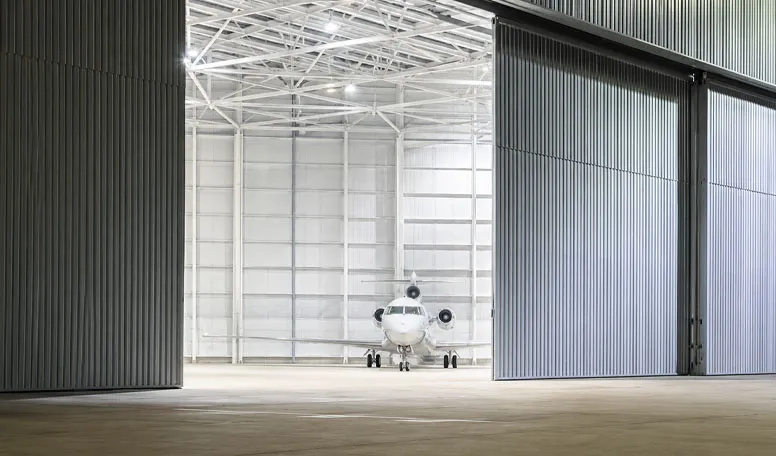
¿Qué papel juega la integridad estructural en los edificios de aviación?
La integridad estructural es fundamental para edificios de aviación. El hangar debe resistir carga de techo, carga de viento, carga de puerta, acción sísmica y uso diario. También debe mantener la integridad estructural alrededor de grandes aberturas de puertas, que a menudo crean demandas especiales en el marco.
Una puerta de hangar grande cambia la manera en que el edificio soporta cargas. El marco alrededor de la puerta debe ser diseñado cuidadosamente. Arriostramientos, columnas, elementos de techo y sistemas de muros deben trabajar en conjunto para mantener la estructura estable.
Planos de ingeniería sellados pueden ser requeridos en algunos mercados o proyectos aeroportuarios. Los compradores deben confirmar este requisito con anticipación. KXD Steel puede apoyar la comunicación de ingeniería, pero la aprobación final debe seguir las regulaciones de construcción locales y la revisión de la autoridad.
¿Cómo Se Comparan Los Hangares Metálicos Preinstalados Con Los Edificios Tradicionales?
Los hangares metálicos pre-ingeniados a menudo se eligen porque pueden combinar diseño, fabricación, entrega y soporte de instalación en un proceso más controlado. Los componentes de acero se preparan en la fábrica y se ensamblan en el sitio según los planos.
La construcción tradicional puede funcionar bien en algunas ubicaciones, pero puede involucrar más trabajo húmedo, mayor tiempo en el sitio y menos flexibilidad para aberturas grandes. Un edificio metálico pre-ingeniado puede ser más práctico cuando el proyecto necesita espacio de gran luz y construcción más rápida.
| Artículo |
Hangar Metálico Pre-Ingeniado |
Construcción Tradicional |
| Sistema Estructural Principal |
Marco de acero con paneles metálicos de pared y techo |
Concreto, mampostería o sistemas estructurales mixtos |
| Espacio Interior |
Más fácil crear un gran espacio libre sin obstrucciones |
Puede requerir soportes interiores adicionales |
| Apertura de Puerta |
Pueden ser diseñados para puertas de hangar de aeronaves grandes |
Generalmente más complejo de ampliar o modificar |
| Velocidad de Construcción |
Montaje más rápido gracias a componentes prefabricados |
Normalmente requiere más tiempo de construcción en el sitio |
| Expansión Futura |
Más fácil de planificar e implementar para muchos proyectos |
Generalmente más difícil de expandir |
| Mantenimiento |
Bajo mantenimiento con recubrimientos protectores adecuados |
Los requisitos dependen de los materiales y el clima local |
Para los propietarios de aeronaves y operadores de aviación, el principal valor no es solo el ahorro de costos. También es un mejor control sobre el espacio, el cronograma y la usabilidad a largo plazo.
¿Cómo Puede un Hangar de Acero para Aeronaves Apoyar la Expansión Futura?
Las operaciones de aviación pueden crecer. Un propietario privado puede añadir otra aeronave. Una escuela de vuelo puede ampliar su flota. Una empresa de mantenimiento puede necesitar más bahías de trabajo. Un edificio de acero puede planificarse teniendo en cuenta la expansión futura.
La disposición de la estructura, el diseño de las paredes laterales, el plan de cimentación y el entramado de los muros frontales pueden organizarse de manera que la ampliación futura resulte más sencilla. El edificio inicial no debe obstaculizar el crecimiento futuro si es probable que se lleve a cabo una expansión.
Por eso la planificación temprana es importante. Cuando los compradores comparten sus necesidades de aviación a largo plazo, KXD Steel puede ayudar a preparar un diseño más flexible. Un buen hangar no solo resuelve el problema de almacenamiento actual. También apoya el negocio de aviación del mañana.
¿Cómo respalda KXD Steel las construcciones de acero para hangares de aeronaves?
KXD Steel es un fabricante profesional de estructuras de acero, socio de diseño de ingeniería y proveedor de soluciones de edificios prefabricados con sede en Qingdao, China. Prestamos servicio a proyectos globales B2B de ingeniería y construcción con edificios de acero personalizados y soluciones de estructuras de acero.
Nuestra gama de productos incluye almacenes de acero prefabricados, talleres industriales, edificios comerciales, hangares de aeronaves, estructuras de acero de varios pisos, gallineros de estructura de acero, puentes de acero prefabricados y casas contenedoras plegables. Esto permite a los compradores obtener diferentes soluciones de construcción de acero de un solo proveedor con experiencia.
En el caso de las construcciones de acero para hangares de aeronaves, KXD Steel puede ofrecer asesoría de proyecto, diseño estructural, planos de taller, fabricación en planta, inspección de calidad, entrega para exportación y apoyo en la instalación. Ayudamos a los compradores del sector aeronáutico a convertir el tamaño de la aeronave, los datos del sitio y las necesidades de construcción en una solución práctica de hangar.
¿Qué información debe enviar para obtener una cotización de hangar?
Una buena cotización comienza con información clara. Los compradores deben proporcionar más que “necesito un hangar de aeronaves”. Cuanto más completos sean los detalles, mejor será la orientación del diseño.
Por favor, prepare:
| Información Necesaria |
Por qué es importante |
| Modelo o Tamaño de la Aeronave |
Determina la luz libre requerida y la apertura de la puerta |
| Número de Aeronaves |
Afecta el tamaño general del edificio y la distribución interna |
| Envergadura y altura de cola |
Determina el ancho del edificio y la altura del alero |
| Tipo de puerta |
Afecta el marco estructural y el diseño de la abertura |
| Ubicación del sitio |
Determina los requisitos de viento, nieve, sismo y corrosión |
| Uso previsto |
Define si el espacio es para almacenamiento, mantenimiento, oficinas o uso mixto |
| Requisitos de aislamiento |
Afecta la selección de paneles y el consumo energético del edificio |
| Códigos de Construcción Locales |
Determinar las especificaciones de ingeniería y los requisitos de aprobación |
| Plan de expansión |
Ayuda a reservar espacio suficiente para el crecimiento futuro |
| Destino de Entrega |
Afecta los métodos de embalaje, el transporte y la planificación logística |
Con esta información, KXD Steel puede preparar una propuesta de hangar de acero para aviación más precisa y guiar el siguiente paso del diseño.
Preguntas frecuentes sobre hangares de aviones de acero
¿Qué es un hangar de aviones de acero?
A hangar de acero para aeronaves es una construcción de acero utilizada para el almacenamiento, mantenimiento, protección y apoyo aeronáutico de aeronaves. Por lo general, incluye una estructura de acero, paneles de techo y pared, un sistema de puertas grandes para aeronaves, ventilación, opciones de aislamiento y un espacio interior de luz libre.
¿Es adecuado un hangar de aviones metálico para aeronaves privadas?
Sí. Un hangar de aviones metálico puede utilizarse para aeronaves privadas, jets ejecutivos, helicópteros, aeronaves de escuelas de vuelo y pequeñas flotas de aviación. El diseño debe adaptarse al tamaño de la aeronave, la abertura de la puerta, la luz libre y las condiciones del sitio.
¿Cuál es el mejor sistema de puertas para un hangar de aeronaves?
Las opciones más comunes de puertas para hangares incluyen puertas plegables, correderas e hidráulicas. El mejor sistema de puertas depende del tamaño de la aeronave, la abertura libre, el presupuesto, el clima, la operación diaria y el espacio disponible en la parte delantera o lateral.
¿Por qué es importante el diseño de luz libre para los hangares de aeronaves?
El diseño de luz libre reduce las columnas interiores y crea un espacio despejado para el movimiento de aeronaves, el estacionamiento, el mantenimiento y el equipo de servicio. Esto es muy importante cuando se almacenan varias aeronaves o tipos de aeronaves de mayor tamaño.
¿Puede KXD Steel personalizar hangares de aeronaves prefabricados?
Sí. KXD Steel puede personalizar hangares de aeronaves prefabricados según el tamaño de la aeronave, el tamaño del edificio, la altura del alero, los requisitos de luz libre, el sistema de puertas, el aislamiento, la ventilación, el clima local y las necesidades de instalación.
¿Qué información se necesita antes de diseñar un hangar de aeronaves de acero?
Los compradores deben proporcionar el tipo de aeronave, número de aeronaves, envergadura, altura de la cola, abertura libre requerida, dimensiones del edificio, preferencia de puertas, ubicación del sitio, condiciones de viento y sísmicas, necesidades de aislamiento y destino de entrega.


 16 de septiembre de 2026