Une mauvaise planification de hangar d'aviation peut gaspiller de l'espace, ralentir les opérations aériennes et exposer des aéronefs de valeur aux dommages météorologiques. Lorsque l'ouverture de porte, la portée libre, la hauteur de gouttière et la conception du bâtiment en acier ne correspondent pas à l'aéronef, les problèmes apparaissent rapidement. Un hangar d'aviation en acier sur mesure aide à résoudre ces problèmes dès le départ.
A hangar d'aviation en acier est un bâtiment en acier pré-ingénierié conçu pour le stockage d'aéronefs, la maintenance, les opérations aériennes et la protection. Il utilise une structure en acier, une charpente à portée libre, un système de porte de hangar large, des panneaux de toiture et de mur, et des systèmes de bâtiment ingénieriés pour accueillir diverses tailles d'aéronefs et soutenir les besoins aéronautiques à long terme.
Qu'est-ce qu'un hangar d'aviation en acier ?
Un hangar d'aviation est un bâtiment utilisé pour le stockage d'aéronefs, la protection, la maintenance, l'inspection et le soutien aéronautique. Il peut servir les propriétaires d'aéronefs privés, les exploitants d'aéroports, les écoles de pilotage, les équipes d'aviation d'entreprise, les entreprises de maintenance, les opérateurs d'hélicoptères et les installations aéronautiques.
Un hangar d'avion en acier utilise une structure en acier comme système porteur principal. Le bâtiment comprend généralement une ossature en acier, des colonnes, des poutres de toiture, des pannes, des lisses murales, des contreventements, des panneaux de toiture, un bardage mural, des lucarnes, une ventilation, des portes et un système de grande porte pour avion. La structure doit fournir suffisamment d'espace pour le mouvement des avions et un stockage sécurisé.
Contrairement aux bâtiments de stockage ordinaires, les hangars doivent se concentrer sur l'ouverture dégagée, les dimensions des avions, l'espace de manœuvre, la hauteur de queue, l'envergure, les zones de maintenance et la sécurité d'accès. Un hangar d'avion métallique n'est pas qu'une simple boîte métallique. C'est un espace de stockage et d'exploitation aéronautique planifié.
Pourquoi choisir une construction en acier pour un hangar d'avion ?
De nombreux acheteurs du secteur aéronautique choisissent une construction en acier pour un hangar d'avion parce que l'acier peut créer des espaces solides, larges et pratiques. Les avions ont souvent besoin d'un espace intérieur dégagé, et une structure en acier peut réduire les colonnes intérieures tout en maintenant la stabilité du bâtiment.
Une construction en acier convient également à une conception pré-industrialisée. Les éléments principaux en acier peuvent être conçus, fabriqués, marqués, emballés et expédiés avant le début des travaux sur site. Cela permet une construction en acier plus rapide et une installation plus facile par rapport à certaines méthodes traditionnelles.
Pour les hangars privés et corporatifs, une planification rentable est importante. Pour les installations d'aviation commerciale, la sécurité et le flux de travail comptent encore plus. Un hangar d'avion en acier peut équilibrer l'espace, la résistance, la vitesse de construction, la personnalisation et la protection à long terme lorsqu'il est correctement conçu.
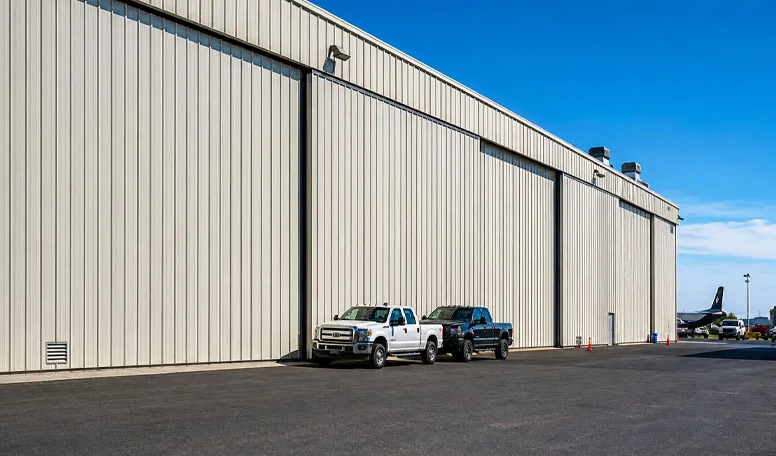
Comment la conception à portée libre améliore-t-elle le mouvement des avions ?
La portée libre est l'une des idées les plus importantes dans un hangar d'avion. Une structure en acier à portée libre permet à l'espace intérieur de rester ouvert sans colonnes intérieures inutiles. Cela aide les avions à entrer et sortir de manière plus sécuritaire et donne aux opérateurs plus d'espace pour l'équipement de service.
Le mouvement des avions est différent du mouvement des chariots élévateurs dans un entrepôt. Les avions ont besoin d'un large espace de virage, de dégagement pour les ailes, de dégagement pour la queue et d'un accès sécuritaire aux portes. Si le hangar a trop de colonnes intérieures, cela peut limiter le mouvement et créer des risques lors des opérations d'aviation quotidiennes.
Une conception à portée libre est particulièrement utile lorsque le hangar doit entreposer plusieurs avions. L'aménagement peut être planifié pour de petits avions, des hélicoptères, des jets d'affaires ou des types d'avions mixtes. La portée finale doit être conçue en fonction de la taille de l'avion, de la largeur du bâtiment et des codes du bâtiment locaux.
Quel système de porte fonctionne le mieux pour un hangar d'avion ?
Le système de porte est l'une des parties les plus importantes de tout hangar d'avion. Une porte industrielle normale n'est généralement pas suffisante. Les hangars d'avion peuvent nécessiter de larges portes pliantes, des portes coulissantes, des portes hydrauliques ou d'autres systèmes d'ouverture de grande dimension.
Une porte bi-pliante est souvent utilisée pour le stockage aéronautique car elle peut fournir une large ouverture tout en économisant l'espace frontal. Les portes coulissantes peuvent convenir aux grands hangars disposant de suffisamment d'espace latéral. Le meilleur choix dépend de la taille du hangar, du type d'avion, du budget, du climat, des besoins d'entretien et de l'utilisation quotidienne.
La porte doit être planifiée conjointement avec la structure du bâtiment en acier. La taille de l'ouverture, la charge au vent, le cadre de support, le système électrique, le système de sécurité et le drainage doivent être pris en compte dès le début. Un bon système de porte protège les avions et favorise également un fonctionnement fluide.
Quels matériaux sont utilisés pour les bâtiments de hangars d'avions métalliques ?
Le matériau pour les hangars d'avions comprend généralement l'acier de structure, le revêtement de toit, le revêtement de mur, les pannes, les lisses, les boulons, les plaques d'assise, les portes, les fenêtres, l'isolation et les systèmes de protection de surface. Ces éléments fonctionnent ensemble comme un seul système de bâtiment.
Un hangar d'avions métallique peut utiliser des systèmes de bâtiments métalliques pré-ingénierie car ils combinent des cadres en acier primaires, une charpente secondaire et des panneaux de toit et de mur métalliques. Le cadre principal fournit la résistance, tandis que les panneaux métalliques extérieurs protègent l'intérieur de la pluie, du vent, de la poussière et du rayonnement solaire.
Pour certains projets, l'isolation peut être ajoutée pour améliorer le confort et réduire les changements de température. Les panneaux isolés peuvent convenir aux espaces de maintenance, aux zones de bureaux ou aux hangars dans des conditions météorologiques chaudes ou froides. Le choix final du matériau doit correspondre aux besoins de stockage des avions, au climat local et aux règlements de construction.
Comment la hauteur sous avant-toit, la taille du bâtiment et l'ouverture libre affectent-elles la conception des hangars ?
La hauteur sous avant-toit est très importante dans la conception des hangars. Le bâtiment doit être suffisamment haut pour la queue de l'avion, le système de porte, les lumières, la structure du toit et le dégagement pour la maintenance. Si la hauteur sous avant-toit est trop basse, le hangar peut sembler acceptable sur papier mais échouer dans un usage réel.
La taille du bâtiment compte également. Un petit hangar pour avion privé peut nécessiter uniquement de l'espace pour un seul appareil et des outils de base. Une installation aéronautique plus grande peut nécessiter de l'espace pour plusieurs appareils, des bureaux, des pièces de rechange, du matériel d'entretien, des zones de lavage et des véhicules de service.
L'ouverture dégagée est la largeur et la hauteur utilisables de la porte du hangar. Elle doit accueillir l'appareil en toute sécurité. Les acheteurs ne doivent pas seulement fournir la longueur totale de l'appareil. Ils doivent également fournir l'envergure, la hauteur de la queue, les besoins en dégagement de porte et l'espace d'opération. Cela aide l'ingénieur à préparer une conception de hangar d'avion en acier pratique.
Quelles installations aéronautiques peuvent utiliser des hangars en acier pré-ingéniérés ?
Les hangars en acier pré-ingéniérés peuvent servir de nombreuses installations aéronautiques. Ils peuvent être utilisés pour le stockage d'avions privés, les départements de vols d'entreprise, les bâtiments de soutien aéroportuaire, les écoles de formation au pilotage, les ateliers d'entretien, les bases d'hélicoptères, le stockage de drones et les bâtiments de service aéroportuaire.
Les hangars d'avion préfabriqués sont également utiles lorsque les acheteurs ont besoin d'une construction plus rapide et d'une gestion de projet plus prévisible. Les composants en acier peuvent être préfabriqués avant la livraison, ce qui permet de réduire les travaux sur site et rend le processus d'installation plus organisé.
Les applications courantes incluent :
| Application aéronautique |
Besoin typique du bâtiment |
Objectif de conception |
| Hangar pour avion privé |
Entreposage pour un ou deux avions |
Ouverture dégagée, faible entretien et entreposage sécurisé |
| Hangar d'entreprise |
Jets d'affaires et salles de soutien |
Apparence professionnelle, espace de bureau et portes larges |
| Hangar d'école de pilotage |
Entreposage pour avions d'entraînement |
Baies multiples et accès pratique |
| Hangar de maintenance |
Entretien et réparation d'aéronefs |
Espace à portée libre, éclairage et zones d'équipement |
| Hangar pour hélicoptères |
Entreposage de giravions |
Hauteur adéquate, accès pratique et déplacement sécuritaire |
| Bâtiment de soutien aéroportuaire |
Stockage pour outils, pièces et équipement d'entretien |
Stockage et flux de travail efficaces |
Les bons types de bâtiments dépendent des besoins en aviation, des types d'aéronefs, de la taille du site et des règles d'approbation locales.
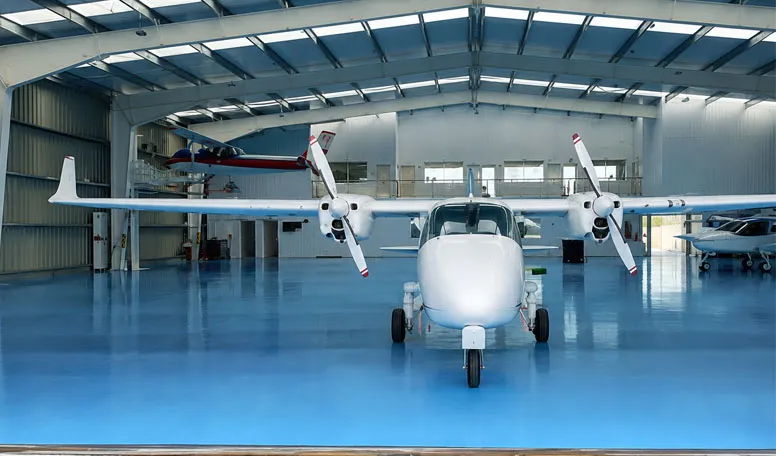
Comment les options de personnalisation peuvent-elles correspondre aux différents types d'aéronefs ?
Chaque hangar d'aviation devrait commencer par l'aéronef. Un hangar pour un avion léger est différent d'un hangar pour un jet d'affaires. Un hangar pour hélicoptère est encore différent. Les hangar d'aviation en acier bâtiments doivent être conçus autour de l'aéronef réel et de l'utilisation quotidienne.
Les options de personnalisation peuvent inclure la taille du bâtiment, la portée libre, la hauteur de l'avant-toit, la pente du toit, la hauteur des murs, le système de portes, la taille des portes pliantes, l'isolation, les lanterneaux, la ventilation, les bureaux, les salles de stockage, les zones de maintenance et la finition extérieure. Le hangar peut également être planifié comme un simple hangar métallique ou comme un bâtiment de support aéronautique plus complet.
Une conception entièrement personnalisable aide à protéger les actifs précieux du propriétaire. Elle améliore également le flux de travail. Lorsque l'aéronef, les outils, les personnes et les véhicules disposent tous de suffisamment d'espace, le hangar se présente comme un bâtiment plus sûr et plus utile pour le stockage aéronautique à long terme.
Que doivent vérifier les acheteurs avant de démarrer un projet de construction de hangar ?
Avant de commencer un projet de construction, les acheteurs doivent rassembler des informations de base. Cette étape permet de gagner du temps et de réduire les erreurs de conception. Un hangar d'avion doit correspondre à la fois à l'aéronef et au site.
Les acheteurs doivent préparer :
- Type et quantité d'aéronefs
- Envergure, longueur et hauteur de queue de l'aéronef
- Largeur et hauteur d'ouverture libre requises
- Taille du bâtiment et plan du site
- Préférence de système de porte
- Conditions locales de vent, neige et sismiques
- Besoins en isolation et ventilation
- Exigences pour le bureau, l'entreposage ou la salle de maintenance
- Codes du bâtiment locaux et réglementations aéroportuaires
- Destination de livraison et conditions d'installation
Ces informations aident l'ingénieur à créer la structure, la charpente, l'ouverture de porte et l'agencement corrects. Elles permettent également d'éviter les hangars sous-dimensionnés, les structures trop coûteuses et les modifications ultérieures.
Comment la protection contre les intempéries affecte-t-elle le stockage des aéronefs ?
Le stockage des aéronefs ne consiste pas seulement à garder les appareils à l'intérieur. Le hangar doit offrir une protection supérieure contre la pluie, le soleil, le vent, la poussière, la neige et les conditions météorologiques difficiles. Une bonne protection et un bon stockage peuvent réduire l'exposition quotidienne et faciliter la maintenance.
A hangar d'aviation en acier peut être conçu avec des systèmes de toiture et de parois étanches, un drainage approprié, un traitement de surface résistant à la corrosion, des options de parois isolées et une ventilation adéquate. Ces options de conception contribuent à créer un environnement intérieur plus sûr pour les aéronefs de valeur.
Dans les zones côtières ou humides, le contrôle de la corrosion devient plus important. Le système de construction peut nécessiter un revêtement plus résistant, des composants galvanisés ou de meilleurs détails d'étanchéité. Cela devrait être discuté avant le début de la fabrication.
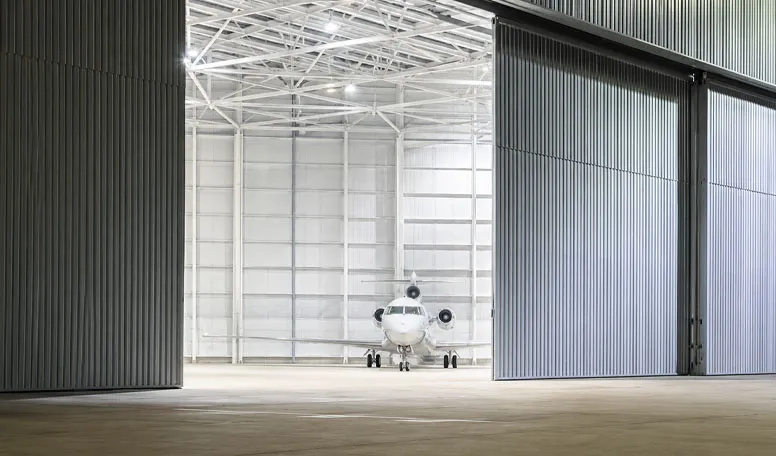
Quel rôle joue l'intégrité structurelle dans les bâtiments aéronautiques ?
L'intégrité structurelle est essentielle pour les bâtiments aéronautiques. Le hangar doit résister à la charge de toiture, à la charge du vent, à la charge de porte, à l'action sismique et à l'utilisation quotidienne. Il doit également maintenir son intégrité structurelle autour de grandes ouvertures de portes, qui créent souvent des exigences particulières pour la charpente.
Une grande porte de hangar modifie la façon dont le bâtiment supporte les charges. La charpente autour de la porte doit être soigneusement calculée. Les contreventements, les poteaux, les éléments de toiture et les systèmes de parois doivent fonctionner ensemble pour maintenir la stabilité de la structure.
Des plans d'ingénierie estampillés peuvent être requis dans certains marchés ou projets aéroportuaires. Les acheteurs doivent confirmer cette exigence dès le début. KXD Steel peut faciliter la communication en matière d'ingénierie, mais l'approbation finale doit suivre les réglementations locales du bâtiment et l'examen des autorités compétentes.
Comment les hangars métalliques préfabriqués se comparent-ils aux bâtiments traditionnels ?
Les hangars métalliques préfabriqués sont souvent choisis parce qu'ils peuvent combiner la conception, la fabrication, la livraison et le support d'installation dans un processus plus contrôlé. Les composants en acier sont préparés en usine et assemblés sur site selon les plans.
La construction traditionnelle peut bien fonctionner dans certains emplacements, mais elle peut impliquer davantage de travaux humides, un temps de chantier plus long et moins de flexibilité pour les grandes ouvertures. Un bâtiment métallique préfabriqué peut être plus pratique lorsque le projet nécessite un espace à grande portée et une construction plus rapide.
| Article |
Hangar métallique préfabriqué |
Construction traditionnelle |
| Système structural principal |
Charpente en acier avec panneaux muraux et de toiture métalliques |
Systèmes structuraux en béton, en maçonnerie ou mixtes |
| Espace intérieur |
Plus facile de créer une grande portée libre sans obstruction |
Peut nécessiter des supports intérieurs supplémentaires |
| Ouverture de porte |
Peut être conçu pour de grandes portes de hangar d'avion |
Généralement plus complexe à agrandir ou modifier |
| Vitesse de construction |
Assemblage plus rapide grâce à des composants préfabriqués |
Nécessite généralement plus de temps de construction sur site |
| Expansion future |
Plus facile à planifier et mettre en œuvre pour de nombreux projets |
Généralement plus difficile à agrandir |
| Maintenance |
Faible maintenance avec des revêtements de protection appropriés |
Les exigences dépendent des matériaux et du climat local |
Pour les propriétaires d'aéronefs et les exploitants aériens, la valeur principale ne réside pas seulement dans les économies de coûts. Il s'agit également d'un meilleur contrôle de l'espace, du calendrier et de l'utilisabilité à long terme.
Comment un hangar d'avion en acier peut-il soutenir une expansion future ?
Les opérations aériennes peuvent se développer. Un propriétaire privé peut ajouter un autre aéronef. Une école de pilotage peut agrandir sa flotte. Une entreprise de maintenance peut avoir besoin de plus de postes de travail. Un bâtiment en acier peut être planifié en prévision d'une expansion future.
La disposition de la charpente, la conception des murs latéraux, le plan de fondation et l'ossature des murs d'extrémité peuvent être organisés de manière à faciliter une extension future. Le bâtiment initial ne devrait pas bloquer la croissance future si une expansion est probable.
C'est pourquoi la planification précoce est importante. Lorsque les acheteurs partagent leurs besoins aériens à long terme, KXD Steel peut aider à préparer une conception plus flexible. Un bon hangar ne résout pas seulement le problème de stockage d'aujourd'hui. Il soutient également l'activité aérienne de demain.
Comment KXD Steel soutient-il les bâtiments de hangar d'avion en acier ?
KXD Steel est un fabricant professionnel de structures en acier, un partenaire en conception technique et un fournisseur de solutions de bâtiments préfabriqués basé à Qingdao, en Chine. Nous accompagnons des projets mondiaux B2B d’ingénierie et de construction avec des bâtiments en acier sur mesure et des solutions de structures en acier.
Notre gamme de produits comprend des entrepôts en acier préfabriqués, des ateliers industriels, des bâtiments commerciaux, des hangars d'avion, des structures en acier à plusieurs étages, des poulaillers à structure en acier, des ponts en acier préfabriqués et des maisons conteneurs en kit. Cela permet aux acheteurs de s'approvisionner en différentes solutions de construction en acier auprès d'un seul fournisseur expérimenté.
Pour les hangars d'aviation en acier, KXD Steel peut assurer la consultation de projet, la conception structurelle, les plans d'atelier, la fabrication en usine, le contrôle qualité, la livraison à l'export et l'assistance à l'installation. Nous aidons les acheteurs du secteur aéronautique à transformer les dimensions des aéronefs, les données du site et les besoins en bâtiment en une solution de hangar concrète.
Quelles informations fournir pour obtenir un devis de hangar ?
Un bon devis commence par des informations claires. Les acheteurs doivent fournir plus que “ j'ai besoin d'un hangar d'aviation ”. Plus les détails sont complets, mieux la conception peut être orientée.
Veuillez préparer :
| Informations requises |
Pourquoi est-ce important ? |
| Modèle ou taille de l'avion |
Détermine la portée libre requise et l'ouverture de porte |
| Nombre d'avions |
Influence la taille globale du bâtiment et la disposition interne |
| Envergure et hauteur de queue |
Détermine la largeur du bâtiment et la hauteur sous avant-toit |
| Type de porte |
Affecte la structure et la conception de l'ouverture |
| Emplacement du site |
Détermine les exigences liées au vent, à la neige, aux séismes et à la corrosion |
| Utilisation prévue |
Définit si l'espace est destiné au stockage, à la maintenance, aux bureaux ou à un usage mixte |
| Exigences d'isolation |
Influence le choix des panneaux et la consommation énergétique du bâtiment |
| Codes du bâtiment locaux |
Déterminer les spécifications techniques et les exigences d'approbation |
| Plan d'expansion |
Aide à réserver un espace suffisant pour la croissance future |
| Destination de livraison |
Influence les méthodes d'emballage, le transport et la planification logistique |
Grâce à ces informations, KXD Steel peut préparer une proposition de bâtiment aéronautique en acier plus précise et orienter la prochaine étape de conception.
FAQ sur les hangars d'avions en acier
Qu'est-ce qu'un hangar d'avions en acier ?
A hangar d'aviation en acier est un bâtiment en acier utilisé pour le stockage, la maintenance, la protection d'avions et le soutien à l'aviation. Il comprend généralement une structure en acier, des panneaux de toit et de murs, un système de grandes portes pour avions, une ventilation, des options d'isolation et un espace intérieur à portée libre.
Un hangar d'avions métallique convient-il aux avions privés ?
Oui. Un hangar d'avions métallique peut être utilisé pour les avions privés, les jets d'affaires, les hélicoptères, les avions d'école de pilotage et les petites flottes aériennes. La conception doit correspondre à la taille de l'avion, à l'ouverture de la porte, à la portée libre et aux conditions du site.
Quel est le meilleur système de porte pour un hangar d'avions ?
Les options de portes de hangar courantes comprennent les portes pliantes, les portes coulissantes et les portes hydrauliques. Le meilleur système de porte dépend de la taille de l'avion, de l'ouverture libre, du budget, du climat, de l'exploitation quotidienne et de l'espace disponible à l'avant ou sur le côté.
Pourquoi la conception à portée libre est-elle importante pour les hangars d'avions ?
La conception à portée libre réduit les colonnes intérieures et crée un espace dégagé pour le mouvement des avions, le stationnement, la maintenance et l'équipement de service. Cela est très important lors du stockage de plusieurs avions ou de types d'avions plus grands.
KXD Steel peut-il personnaliser des hangars d'avions préfabriqués ?
Oui. KXD Steel peut personnaliser des hangars d'aviation préfabriqués selon la taille de l'aéronef, la taille du bâtiment, la hauteur à l'égout, les exigences de portée libre, le système de portes, l'isolation, la ventilation, le climat local et les besoins d'installation.
Quelles informations sont nécessaires avant de concevoir un hangar d'aviation en acier ?
Les acheteurs doivent fournir le type d'aéronef, le nombre d'appareils, l'envergure, la hauteur de queue, l'ouverture libre requise, la taille du bâtiment, la préférence de porte, l'emplacement du site, les conditions de vent et sismiques, les besoins d'isolation et la destination de livraison.


 16 septembre 2026