A ponte de aço exemplo de projeto compara uma configuração estrutural, treliça, viga de alma cheia ou viga caixão soldada, com as restrições do projeto, como o vão, o método de montagem e o acesso ao local, antes de iniciar o cálculo detalhado. Esta comparação reflete as especificações de pontes pré-fabricadas atualmente publicadas pela KXD Steel, vigentes em setembro de 2026.
O Que Significa “Exemplo de Projeto” Antes do Início do Cálculo
Um exemplo de projeto, no contexto de pontes, não é um conjunto de cálculos carimbado. É a decisão anterior a isso: qual família estrutural sustenta a carga, como o tabuleiro se conecta a essa família e como a estrutura finalizada se divide em módulos transportáveis. Se essa sequência estiver errada, a etapa de cálculo herda o erro.
Ponte de Aço Pré-Fabricada da KXD / linha de Pontes Modulares de Aço (modelo KXDF-01) é desenvolvida em torno de três famílias estruturais: pontes em treliça de aço, pontes de viga de alma cheia (plate girder) e pontes de viga caixão soldada, cada uma montada a partir de módulos pré-fabricados em vez de construída integralmente no local.
Um Erro de Interpretação Comum: Tratar o Exemplo como o Projeto Final
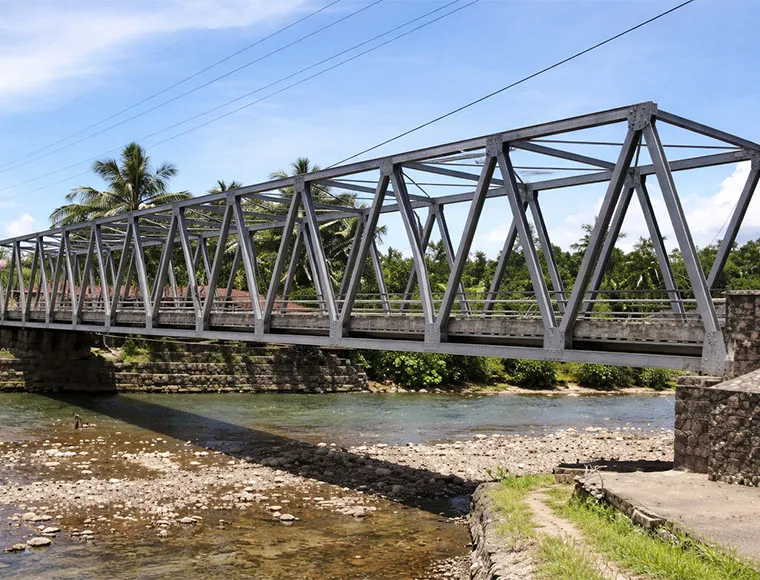
Os responsáveis pelo projeto às vezes interpretam uma comparação como esta como um substituto da validação estrutural. Não é. A capacidade de vão, a largura do tabuleiro e o detalhamento das ligações ainda precisam ser verificados em relação ao local real, à jurisdição normativa e ao caso de carregamento antes da emissão dos desenhos de fabricação. A KXD não publicou uma tabela de vãos por tipo para esta linha, então atribuir um valor específico de vão a uma configuração neste artigo seria inventado, não baseado em fonte. Esse número foi omitido por esse motivo, não porque não importe.
Por Que a Decisão do Tipo Estrutural Vem Primeiro
Os resultados de pesquisa sobre este tema tendem para material acadêmico e de órgãos normativos específico por código, o tipo de recurso de que um engenheiro que verifica um detalhe de fadiga precisa, não de um responsável por projeto comparando três tipos de ponte antes de uma chamada com o fornecedor. Essa lacuna é o motivo pelo qual este artigo permanece no nível da configuração: o que muda na fabricação, na ligação e na entrega quando um projeto passa de um tabuleiro em treliça para uma viga caixão, em vez de como executar uma combinação de cargas.
Cada família transmite cargas de forma diferente, e essa diferença determina o que acontece na fábrica e no canteiro de obras:
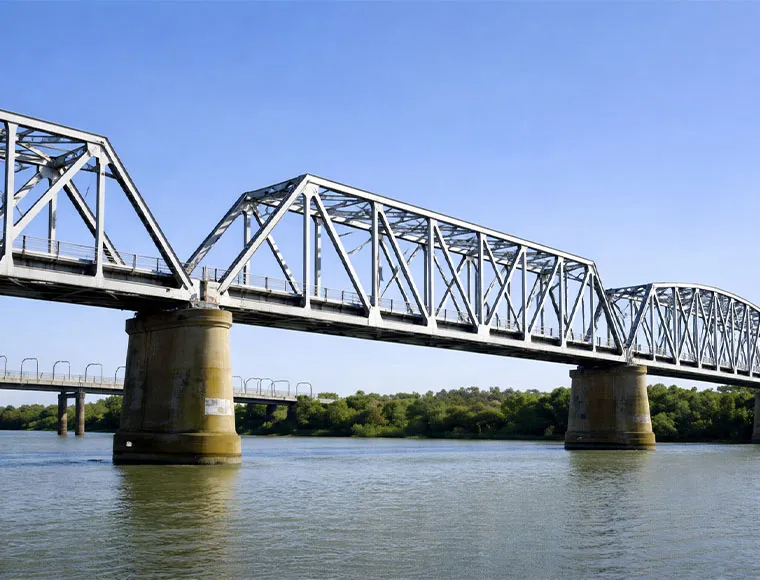
- Ponte em treliça metálica. Uma malha aberta de elementos triangulados transmite cargas principalmente por tração e compressão axial nas cordas e diagonais, em vez de flexão em uma alma sólida. Para um mesmo peso de aço, uma treliça geralmente consegue vencer um vão livre maior, mas a geometria implica um número maior de ligações fabricadas em oficina que precisam ser montadas em campo.
- Ponte em viga de alma cheia. Uma chapa de alma sólida com mesas superior e inferior transmite cargas principalmente por flexão. O menor número de peças discretas geralmente resulta em uma sequência de montagem mais rápida para vãos moderados, ao custo de uma seção mais pesada do que uma treliça equivalente cobrindo a mesma distância.
- Ponte de viga caixão soldada. Uma seção transversal fechada, geralmente rectangular ou trapezoidal, formada por chapas soldadas. A seção fechada resiste bem à torção, motivo pelo qual tende a ser utilizada em alinhamentos curvos ou em cruzamentos com carga de tráfego descentralizada. A construção soldada, em vez de aparafusada, é o método de ligação que a própria nomenclatura de produtos da KXD confirma para esta configuração.
Três Configurações Estruturais Lado a Lado
| Configuração |
Caminho Principal de Carga |
Ligação em Obra |
Onde Costuma Ser Adequado |
O Que Ainda Precisa de Confirmação no Projeto |
| Ponte em treliça de aço |
Forças axiais através de banzos e diagonais triangulados |
Emendas de campo aparafusadas nos nós dos painéis (prática geral da indústria) |
Vãos livres mais longos para um determinado peso de aço |
Faixa exata de vão e espaçamento de painéis para a linha KXDF-01 |
| Ponte em viga de alma cheia |
Flexão através de uma placa de alma sólida com banzos superior e inferior |
Emendas de banzo aparafusadas ou soldadas (prática geral da indústria) |
Vãos moderados com uma sequência de montagem mais simples |
Largura do tabuleiro e espaçamento entre vigas específicos desta linha |
| Ponte de viga caixão soldada |
Resistência à torção através de uma secção transversal soldada fechada |
Cordões de soldadura de penetração total (confirmado pela designação de produto da KXD) |
Alinhamentos curvos e cargas excêntricas ou descentradas |
Espessura da parede e espaçamento dos reforços para esta linha |
A designação de produto da KXD confirma a construção soldada especificamente para a configuração de viga em caixão. A prática de ligação em obra indicada para as configurações de treliça e de viga de alma cheia reflete a prática comum de engenharia de pontes, e não uma especificação publicada pela KXD, devendo ser confirmada com base nos desenhos específicos do projeto e não assumida a partir desta tabela.
KXDF-01: O Que É Fornecido em Todas as Três Configurações
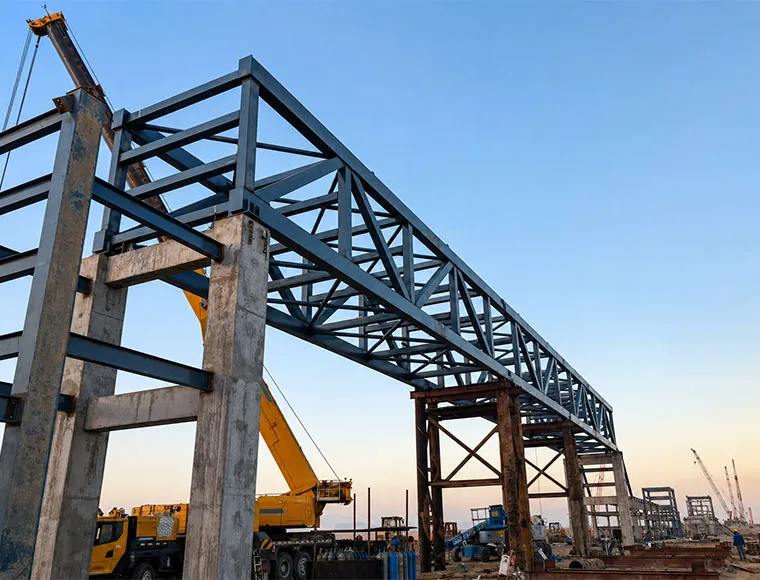
Independentemente da família estrutural escolhida para um projeto, KXD documenta o seguinte para a linha de Ponte de Aço Pré-fabricada / Ponte de Aço Modular (KXDF-01):
- Aplicações: projetos rodoviários, ferroviários, pedestres, industriais, de mineração, de acesso temporário e de viadutos urbanos
- Quantidade mínima do pedido: 600 m²
- Capacidade de fornecimento publicada: 8.000 toneladas/mês, um valor de catálogo que abrange conjuntamente as linhas de estruturas de aço, pontes e galpões avícolas da KXD, e não um número exclusivo para pontes
- Certificação indicada na página do produto: ISO
- Faixa de preço: USD 40 a 100 por metro quadrado, dependendo da especificação
Perguntas frequentes
A faixa de vão varia entre as opções de treliça, viga de placa e viga caixão?
Em geral, na engenharia de pontes, sim — famílias estruturais diferentes normalmente cobrem distâncias de vão diferentes para o mesmo peso de aço. Os materiais publicados pela KXD não detalham as faixas de vão por configuração para a linha KXDF-01, portanto confirme isso com uma solicitação de engenharia específica do projeto, em vez de assumir um valor com base em referências gerais.
Uma das três configurações é mais econômica do que as outras?
A KXD publica uma única faixa de preço, USD 40 a 100 por metro quadrado, para a linha de Ponte de Aço Pré-fabricada, em vez de faixas separadas por configuração. O valor final depende da especificação, então solicitar uma cotação antecipada é a forma confiável de comparar o custo entre as configurações.
Qual configuração é adequada para uma travessia curva ou com carga excêntrica?
Uma seção transversal fechada, característica definidora da viga caixão, resiste à torção de forma mais eficaz do que uma treliça aberta ou a alma de uma única viga de placa, motivo pelo qual as seções fechadas são a escolha comum para alinhamentos curvos na engenharia de pontes em geral. Confirme isso com base no alinhamento e na carga reais junto à equipe de engenharia da KXD antes de tomar essa decisão.
O que significa “modular” para os prazos de entrega?
Significa que a ponte é enviada em seções pré-fabricadas, em vez de exigir fabricação completa no local. A KXD não publicou um prazo padrão para a linha de pontes nos materiais atuais, portanto o prazo precisa ser solicitado para cada projeto.
A questão em aberto para qualquer uma dessas três configurações é a mesma: como o vão, a largura do tabuleiro e o detalhamento das ligações interagem com a travessia real, não apenas a mecânica geral descrita aqui. Isso só é respondido depois que a equipe de engenharia da KXD tiver em mãos a geometria do local, não antes.


 20 de setembro de 2026