KXD Steel Technical & Project Team | Qingdao KXD Steel Structure Co., Ltd. | Published November 10, 2026
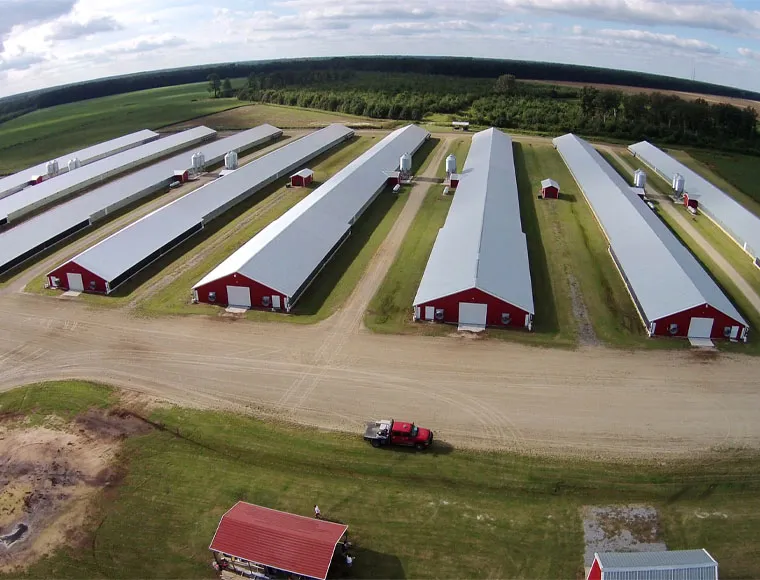
A KXD avícola de estructura de acero ligero is listed for broilers, layers and breeders at a reference capacity of 10,000–50,000 birds per house, priced at USD 40–100 per m² depending on specifications. Slatted floors and feeding, drinking, manure, cooling and lighting systems are available, and corrosion and heat gain are the two risks to settle in writing.
What KXD Publishes for the Poultry House
Table 1 collects every parameter KXD lists for this product. Anything not in the table is not published, and the guide says so each time it comes up.
| Parámetro |
Valor publicado |
| Birds housed |
Pollos de engorde, gallinas ponedoras, reproductoras y otras aves |
| Capacidad de referencia |
10.000–50.000 aves por nave |
| Pedido mínimo |
600 m² |
| Precio |
USD 40–100/m², según especificaciones |
| Slatted floor (optional) |
Paneles de 1.200 × 500 × 40 mm |
| Opciones de orificio de la rejilla |
16 × 16 mm o 20 × 26 mm |
| Vida útil indicada de la rejilla |
Más de 10 años |
| Systems available |
Alimentación, bebederos de tetina, retirada de estiércol, refrigeración, ventilación, iluminación y control ambiental |
| Certification on the product table |
ISO |
Table 1. Published parameters for KXD’s steel structure poultry house.
Three items a buyer would normally want are missing from the poultry house page: a design life for the structure, the steel grade and coating system, and the roof and wall insulation. The company’s general building range lists single-skin, EPS, PU, rock wool and glass wool cladding options, but the poultry house page does not say which of them apply here. The sections on corrosion and heat gain turn each gap into a written question for the supplier.
How KXD Builds the Frame
KXD discloses CNC cutting, automated welding, shot blasting, surface treatment, component assembly and finished-product inspection as its core production processes. Its engineering team works in Tekla, PKPM and 3D3S, so a detailed drawing set is a reasonable thing to request before you pay a deposit. The shot blasting and surface treatment steps matter most for a poultry house, because they sit under whatever coating the frame finally carries; what that coating is, KXD does not publish for this product.
Standards give you something to check against. ISO identifies ISO 9001, ISO 14001 and ISO 45001 as its management-system standards for quality, environment, and occupational health and safety (source: ISO), and KXD’s wider manufacturing pages reference CE EN 1090 alongside them. These describe how a factory manages its processes. They do not state a coating thickness or a design life, which have to come from the quotation.
Where Steel Helps and Where It Costs You
Compared with supplier pages that list advantages and stop there, a buyer’s view has to put the unknowns on the same page as the benefits.
What works in its favor:
- Components are cut, welded, blasted and inspected in a factory, and the frame is detailed in 3D before fabrication, so fit problems surface in the drawing stage.
- The price range and the slat specification are published, so a first screening needs no call.
- Feeding, drinking, manure, cooling and ventilation systems can be requested from the same supplier as the building, which leaves one scope to reconcile.
What works against it:
- A house is a damp, manure-handling building, so corrosion protection is a real specification item and not a footnote, and KXD does not publish it for this product.
- Roof heat gain is a design problem that insulation and ventilation have to solve together, and neither is specified on the page.
- The 600 m² minimum order excludes small houses.
- The USD 40–100/m² spread is 2.5 to 1 with no published scope, so it works for screening and not for budgeting. The separate guide to commercial chicken house cost breaks that down.
Corrosion: What to Ask Before You Sign
Manure, litter moisture and wash water give a poultry house a corrosion exposure that a warehouse never sees, and ammonia from manure is the usual name given to it. KXD’s page does not state a coating system for the frame, the wall and roof sheet, or the fasteners, so the first job is to get one in writing.
Ask for these items on the quotation:
- The coating system on the main frame, with the surface preparation grade and the film or zinc thickness.
- The same detail for purlins, wall sheet, roof sheet and fasteners, listed separately, since they are different parts with different exposure.
- How cut edges, welds and bolt holes are protected after fabrication.
- Which zone of the wall sits closest to litter and wash water, and whether that zone has a different specification from the upper wall.
- What maintenance the supplier expects over the life of the house, and who carries out repairs under a warranty period that is stated in the quote.
An edge case that catches buyers: two quotes can name the same steel grade and still differ in coating, because the grade describes the metal and not the protection on it. Treat a coating line left blank in a quote as a gap, not as a default.
Heat Gain: Roof, Insulation and Ventilation as One System
A steel roof in direct sun passes heat into the house, and the birds are already a heat source. Three published or listed items bear on this: the cooling and ventilation systems KXD lists as available, the environmental-control option, and the cladding choices in the wider building range. What is missing is the pairing, meaning which insulation and which cooling and ventilation capacity KXD would put in a house for a given climate and flock.
Ask for these items on the quotation:
- Roof and wall insulation type and thickness, stated per surface.
- The ventilation and cooling capacity the quote is sized for, and the design conditions behind it.
- The air inlet and exhaust layout shown on the drawings, not described in a sentence.
- How the environmental-control system interacts with the cooling and ventilation lines, and whether it is included.
- Whether the supplier will design to the local summer conditions you give, and in what form that design basis appears in the quote.

Inside the House: Floor and Systems
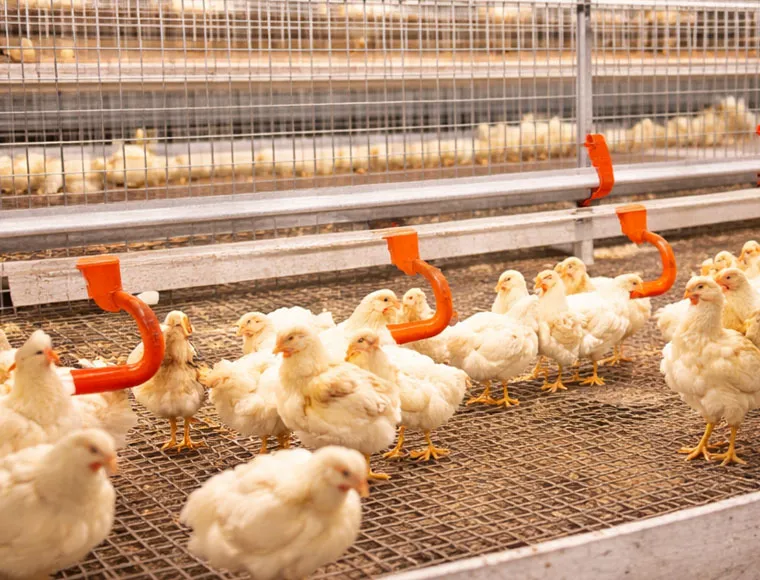
Slatted floor. KXD’s optional slat panel is 1,200 × 500 × 40 mm, so each panel covers 0.6 m² and 100 m² of slatted floor is about 167 panels. Hole options are 16 × 16 mm or 20 × 26 mm, and KXD lists a service life above 10 years. KXD’s page does not say which hole size suits which bird or manure-handling method, so put that question to the supplier together with the bird type. Ask whether the slats are priced per panel or per m², since the two figures are not directly comparable.
Feeding, drinking and manure removal. All three are listed as available systems, including nipple drinking. The decisions that move cost are whether KXD or a third party supplies them, how the line layout is drawn, and whether manure removal is designed with the slatted floor or independently of it.
Cooling, ventilation, lighting and environmental control. These are the systems that tie the building to the heat-gain question above, so they belong in the same quote as the roof, not in a separate later order.
Selection Checklist by Flock Size and Climate
Table 2 sets out each decision, what it depends on, and what to ask KXD. It does not assign thresholds, because KXD publishes none; the point is to put the right question to the right driver.
| Decision |
Depends on flock size |
Depends on climate |
Ask KXD for |
| Floor area |
Bird count and the stocking density your rules or integrator require; reference capacity is 10,000–50,000 birds per house |
Ninguno |
Floor area behind your bird count; confirmation it clears the 600 m² minimum |
| Roof and wall insulation |
Heat the flock itself releases |
Summer sun load, winter cold |
Type and thickness per surface |
| Ventilation and cooling capacity |
Bird count and body size |
Peak summer temperature and humidity |
Capacity and design conditions in the quote |
| Feeding and drinking layout |
House length and bird type |
Ninguno |
Line layout drawing and component list |
| Manure removal |
Manure volume, bird type |
Humidity in your region |
System type, and whether it is designed with the slat floor |
| Protección contra la corrosión |
Wash-down frequency you plan |
Humidity and coastal exposure |
Coating system for each part, listed separately |
| Foundation |
Total building weight and equipment loads |
Frost, soil and wind conditions at your site |
Anchor-load drawings for a local contractor |
Table 2. Selection checklist for a steel structure poultry house.
From Enquiry to Order in Five Steps
- Define the project in numbers. Bird type, bird count, target floor area and your country or region. Done when: the floor area is at least 600 m² and you can explain how you reached it.
- Send the Table 2 questions with the enquiry, so the first reply is already specific.
- Request the drawing set produced in the supplier’s 3D tools, including inlet and exhaust layout and the anchor loads for the foundation.
- Compare quotes line by line, with coating, insulation and ventilation capacity stated in each. A quote that leaves them out is incomplete, not cheaper.
- Confirm the commercial terms: Incoterm, port, erection support and the warranty period.
Mistakes That Cost Money Later
Sizing from the reference capacity alone is the common one. The 10,000–50,000 range spans several house sizes, and KXD does not publish the floor area behind either end, so your own stocking density has to drive the area.
Picking a slat hole size on price alone is another. The two hole options exist for a reason that KXD’s page does not explain, so the supplier needs to name it for your birds before you order.
Leaving the foundation out of the budget catches first-time buyers more often than anything on the steel side, because KXD’s published material does not state who builds it.
Next Step
Send your bird type, bird count and region, and ask for a quotation that follows Tables 1 and 2 with every missing item filled in. The running costs of the house, such as cooling energy, labour and litter handling, fall outside this guide and decide payback once the build cost is known.
Preguntas frecuentes
Q: How many birds can a steel structure poultry house hold?
A: KXD lists a reference capacity of 10,000–50,000 birds per house for broilers, layers, breeders and other poultry. Your figure depends on floor area and stocking density.
P: ¿Cuál es el pedido mínimo?
A: 600 m².
Q: What does it cost?
A: KXD publishes USD 40–100 per m², depending on specifications. The published material does not state which systems and site works fall inside that figure, so a full project needs a written quotation.
Q: What size is the slatted floor, and how long does it last?
A: The optional panel is 1,200 × 500 × 40 mm with 16 × 16 mm or 20 × 26 mm holes, with a listed service life above 10 years.
Q: Does a steel poultry house corrode, and does it overheat?
A: Both are risks to specify for, because manure and moisture act on steel and a roof in sun passes heat inward. KXD does not publish the coating system or the insulation for this product, so request both in writing.
Q: Which systems can come with the house?
A: Feeding, nipple drinking, manure removal, cooling, ventilation, lighting and environmental-control systems are listed as available.



 November 10, 2026