Equipe Técnica e de Projetos da KXD Steel | Grupo de Engenharia de Estruturas de Aço | Publicado em 7 de setembro de 2026
A construção de pontes de aço passa por quatro fases interligadas: fabricação na oficina, montagem experimental, segmentação para transporte e montagem no local com parafusamento. A maior parte do risco relacionado ao cronograma concentra-se nas fases anteriores à entrega — o tempo de fechamento da estrada ou da faixa de rolamento é determinado quase inteiramente pela forma como essas etapas anteriores foram sequenciadas, e não pela montagem em si.

Fase 1: Fabricação na Oficina
- Corte e prepare os elementos de aço de acordo com o projeto estrutural — banzos de treliça, almas e mesas de vigas de chapas ou chapas de vigas-caixão, dependendo da configuração especificada para o projeto.
- Solde as conexões principais em um ambiente controlado de oficina, onde as tolerâncias podem ser medidas e corrigidas antes mesmo de uma peça deixar a fábrica. Esta é a etapa em que é mais barato detectar um erro dimensional.
- Perfure e ajuste os furos dos parafusos das conexões de campo que serão feitas posteriormente no local. O alinhamento dos furos é verificado aqui em relação ao elemento conectado, e não presumido apenas com base nos desenhos.
- Aplique proteção contra corrosão — sistema de pintura ou galvanização por imersão a quente, escolhido com base nas condições de exposição do local — antes do envio do componente.
Verificação de conclusão: cada seção fabricada deve ser inspecionada dimensionalmente e documentada de acordo com o desenho de fabricação antes de passar para a montagem de teste. Ignorar essa verificação é a causa mais comum de atrasos posteriores no ajuste em campo.
Fase 2: Montagem de Teste
- Monte as seções principais na fábrica ou em um pátio de preparação antes do envio, verificando se os furos dos parafusos estão alinhados e se as conexões se encaixam sem necessidade de forçar.
- Marque e numere cada componente pré-ajustado (match-fit) para que a mesma orientação e sequência sejam reproduzidas exatamente no local — uma etapa fácil de tratar como burocracia e cara de ignorar quando é exatamente isso.
A montagem experimental é a fase que os documentos voltados ao público especificador dos concorrentes tendem a tratar como nota de rodapé, mesmo sendo o que impede uma equipa de descobrir um desalinhamento por vez pela primeira vez numa estrada já interditada. Os compradores que avaliam um fabricante devem perguntar especificamente se a montagem experimental está incluída, e não simplesmente assumir que está.
Fase 3: Segmentação para Transporte
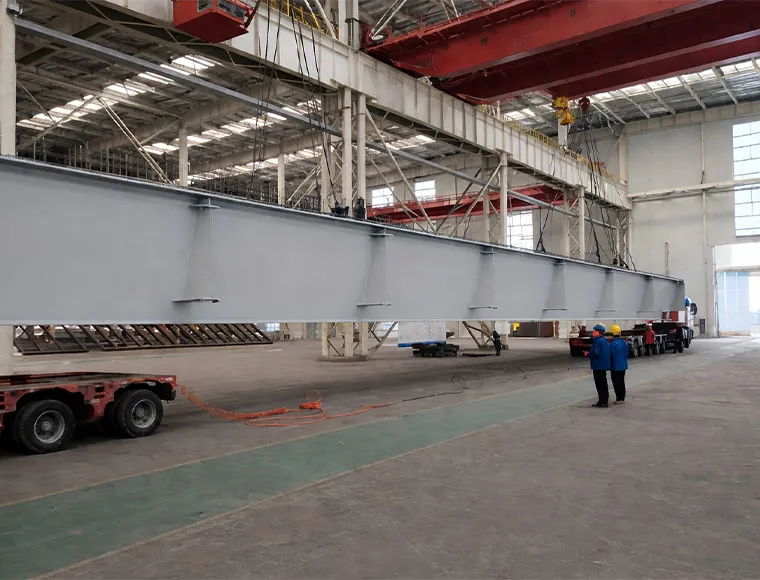
- Segmente a estrutura em módulos transportáveis, dimensionados de acordo com as restrições da rota — raio de viragem, altura livre de pontes, limites de peso das estradas — e não com base num tamanho ideal de fabricação. Uma estrutura que seria transportada em duas peças numa rota sem restrições pode precisar de três ou quatro segmentos se a entrega tiver de passar por um corredor limitado.
- Sequencie a entrega de acordo com a ordem de montagem, de modo que os módulos cheguem na sequência em que serão içados, e não na ordem que foi mais conveniente para o carregamento.
Fase 4: Montagem Aparafusada no Local
Prepare as fundações e os encontros em paralelo com a fabricação, para que o local esteja pronto no momento em que os módulos chegarem — é esse planeamento paralelo que realmente reduz o tempo total do projeto, mais do que qualquer ganho de velocidade obtido durante a própria montagem.
- Posicione e alinhe o primeiro módulo em relação à fundação concluída, verificando o nível e o alinhamento antes de o segundo módulo se ligar a ele. Cada ligação subsequente agrava qualquer erro introduzido nesta etapa.
- Aparafuse os módulos seguintes na sequência previamente planeada, seguindo as marcas de correspondência estabelecidas durante a montagem experimental, em vez de determinar novamente o ajuste no local.
- Aplique o torque e inspecione cada ligação aparafusada de acordo com os valores de torque especificados, documentando cada ligação em vez de verificar apenas uma amostra.
- Conclua a inspeção final e a verificação de carga antes de a travessia ser reaberta ao tráfego.
Verificação de conclusão: uma montagem parafusada que tenha seguido corretamente as etapas 5–8 não deve exigir solda em campo nem mais do que um mínimo de cortes no local — se qualquer uma das duas se tornar necessária, isso normalmente remete a uma etapa de pré-montagem de teste ou de segmentação para transporte que foi omitida ou feita às pressas.
Verificação de conclusão: uma montagem parafusada que tenha seguido corretamente as etapas 5–8 não deve exigir solda em campo nem mais do que um mínimo de cortes no local — se qualquer uma das duas se tornar necessária, isso normalmente remete a uma etapa de pré-montagem de teste ou de segmentação para transporte que foi omitida ou feita às pressas.
O que realmente determina a duração da interdição da via
O equívoco mais comum no planejamento do cronograma de obra é supor que o tempo de montagem cresce em proporção direta ao tamanho da ponte. Na prática, a duração da montagem é determinada mais pela quantidade de ligações parafusadas a executar e pelo quão bem essas ligações foram pré-ajustadas na pré-montagem de teste do que pelo vão total ou pela tonelagem. Uma ponte maior que passou por uma pré-montagem de teste completa pode ser montada mais rápido do que uma menor em que a marcação de correspondência foi omitida e as equipes ajustam as ligações pela primeira vez no local.
Parâmetros do produto para esta sequência de montagem
Esta sequência se aplica à Ponte de aço pré-fabricada / linha de Pontes Modulares de Aço da KXD (modelo KXDF-01):
- Configurações estruturais: treliça de aço, viga de alma cheia, viga caixão soldada
- Método de construção: modular/pré-fabricado, montagem em campo com parafusos
- Aplicações: rodoviária, ferroviária, pedonal, industrial, mineração, acesso temporário, viaduto urbano
- Quantidade mínima do pedido: 600 m²
- Capacidade mensal de fornecimento publicada para esta linha de produtos: 8.000 toneladas
- Certificação indicada na página do produto: ISO
- Faixa de preço: USD 40–100/m², dependendo da especificação
Perguntas frequentes
P: Quanto tempo normalmente leva a montagem aparafusada em comparação com uma construção soldada no local?
R: KXD não publica um prazo fixo para a montagem, pois ele depende do vão, do número de módulos e do acesso ao local — mas a montagem aparafusada elimina a soldagem no local, dependente das condições meteorológicas, do caminho crítico, que é o principal motivo pelo qual geralmente é mais rápida do que alternativas soldadas em projetos comparáveis.
P: A montagem de teste é sempre necessária?
R: Para pontes modulares aparafusadas, pular a montagem de teste transfere o risco de uma incompatibilidade de encaixe para o local da obra, onde é muito mais caro corrigi-la — a montagem de teste é a etapa que detecta esse erro enquanto ainda é barato corrigi-lo.
P: O que determina quantos segmentos uma ponte é enviada?
R: As restrições da rota — raio de curva, gabarito vertical e limites de peso das estradas ao longo do trajeto de entrega — e não um tamanho ideal de fabricação.
P: O trabalho das fundações pode começar antes de a fabricação ser concluída?
R: Sim, e realizá-los em paralelo é uma das maneiras mais eficazes de reduzir o tempo total do projeto, pois isso significa que o local estará pronto quando os módulos chegarem, em vez de se tornar o próximo gargalo.
Os compradores que estiverem definindo o escopo de um projeto devem perguntar diretamente ao fabricante se a montagem de teste e a marcação de correspondência estão incluídas no processo cotado — a resposta diz mais sobre a duração esperada no local do que o vão ou a faixa de preço publicados.



 4 de setembro de 2026