KXD Steel Technical & Project Team | Engineering, Detailing & Project Delivery | Published: October 31, 2026
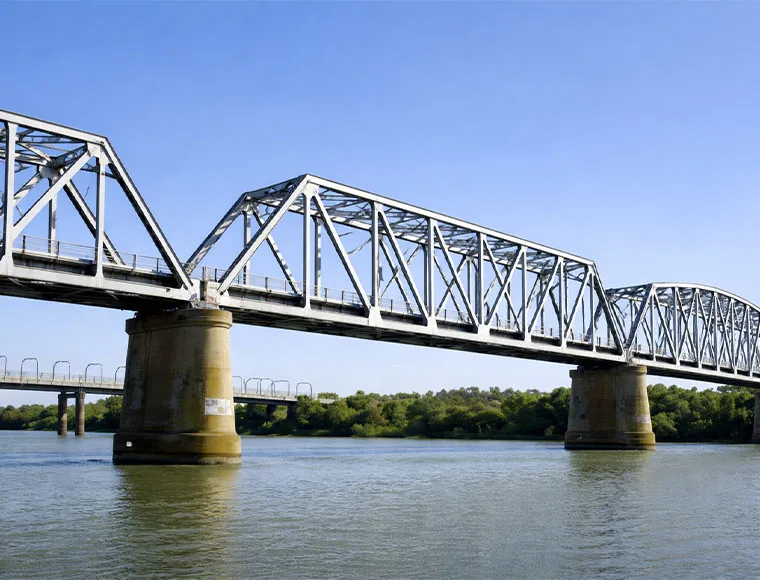
A ponte in acciaio for sale is almost never a ready-made item you can order from a listing. Prefabricated bridges such as KXD’s KXDF-01 are engineered to your span, load class and abutments first, then fabricated as modular segments. KXD’s published price range is USD 40–100/m², but a firm quote needs site and load data.
Is There Such a Thing as an Off-the-Shelf Steel Bridge?
Q: Can I buy a steel bridge the way I’d buy a metal building kit?
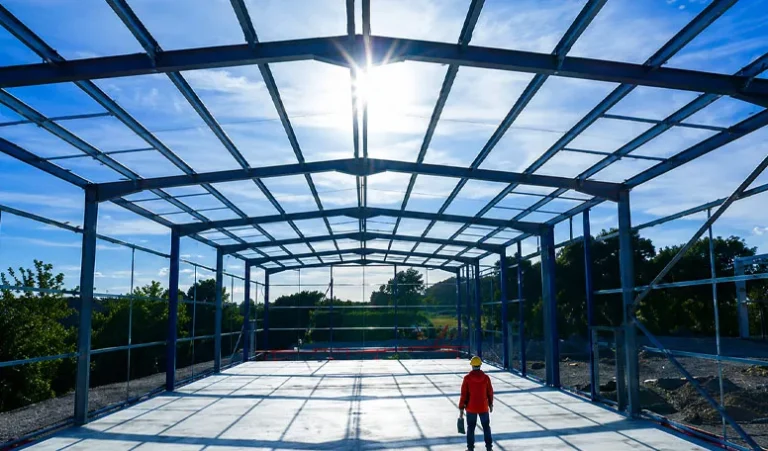
Not in the way most search results suggest. A metal building sits on a slab you control. A bridge sits on two supports that someone else may have designed, carries loads defined by a road or rail authority, and usually needs sign-off before anyone is allowed to drive across it.
That is why a manufacturer cannot responsibly pull a bridge off a shelf. The steel has to be sized for your clear span, your vehicle or pedestrian loading and the bearing positions on your abutments. “Prefabricated” describes how the bridge is made (in a factory, in segments), not that it was made before you asked.
Q: What does “prefabricated steel bridge kit” actually mean?
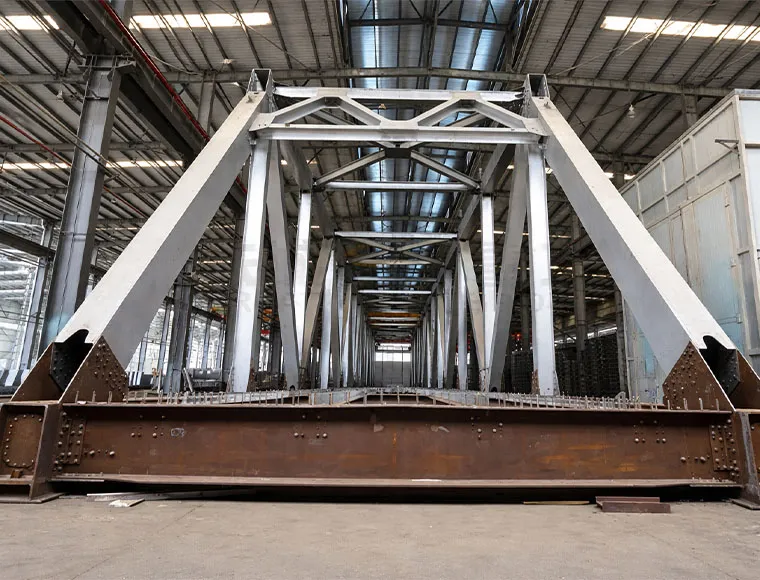
In practice, a “kit” is a set of factory-fabricated components (girders or truss panels, cross members, bracing, deck elements and connection hardware) delivered with drawings for bolting together on site. The engineering is still project-specific. What the kit format saves is site welding and site cutting, because those operations already happened in the shop.
Q: Why do online listings price bridges per piece, per ton or per square metre?
Because they are pricing different things. Compared with marketplace-style listings, where a low “per piece” price often refers to a single truss panel rather than a working crossing, a per-m² quote for a complete bridge deck area is easier to compare across suppliers. Before comparing any two numbers, convert them to the same basis and confirm what each one includes.
Common misconception: a low unit price on a listing is a bridge price. Frequently it is the price of one component, with bearings, deck, railings, coating upgrades and shipping all added later.
Before You Ask for a Price: 7 Things to Have Ready
Q: What information does a manufacturer need before it can quote?
The more of this you can send in the first enquiry, the fewer rounds of questions before a usable number comes back:
- Crossing length and site survey. The clear span between supports, plus a topographic or cross-section drawing if one exists.
- What will cross it. Pedestrians only, light vehicles, trucks, mining haul vehicles or rail. State the heaviest vehicle and axle configuration you expect.
- Design code and load class. The code named in your project specification or required by the approving authority.
- Deck width and lanes. Clear walkway or carriageway width, plus kerbs, railings and any utility trays.
- Abutment status. Existing, new, or temporary, and who is designing them.
- Site access and delivery route. Nearest port, road restrictions, crane access and laydown area. These decide segment lengths.
- Environment. Coastal exposure, de-icing salts, flood levels or industrial atmosphere, which drive the coating specification.
If items 2 and 3 are blank, expect the first reply to be a question, not a price.
Q: Who designs the abutments, the steel supplier or my own engineer?
This is the interface where most bridge purchases go wrong. The steel superstructure and the concrete substructure are usually designed by different parties, yet they meet at a few critical points: bearing seats, anchor bolt positions, expansion gaps and deck levels.
A workable sequence looks like this:
- Your civil engineer confirms abutment type and approximate bearing levels.
- The steel supplier issues bearing reactions and anchor bolt layouts from its preliminary design.
- Your engineer designs the abutments to those reactions.
- Both parties sign off one shared interface drawing before fabrication starts.
- Anchor bolts are cast in using a template, then surveyed before the steel ships.
Step 5 sounds minor. A bolt group set out of tolerance can leave segments waiting on site while concrete is broken out and redone.
Q: Which load standard should I specify?
Use the code your approving authority accepts. KXD’s bridge product page does not list a single bridge design code, so state yours in the enquiry and ask the quotation to confirm it in writing. Do not leave this as “standard loading”; two suppliers can read that phrase very differently and quote two different structures.
KXDF-01: What KXD Publishes About Its Prefabricated Steel Bridge
Q: What bridge types and applications does KXDF-01 cover?
| Parametro |
Published value (KXD product page) |
| Modello |
KXDF-01, Prefabricated / Modular Steel Bridge |
| Structural forms |
Steel truss bridge; plate girder bridge; welded box girder bridge |
| Metodo di costruzione |
Modulare / prefabbricato |
| Applicazioni |
Autostradale, ferroviario, pedonale, industriale, minerario, accesso temporaneo, sovrappasso urbano |
| Ordine minimo |
600 m² |
| Certificazione indicata sulla pagina del prodotto |
ISO |
| Published price |
USD 40–100/m², in base alle specifiche |
| Span range, load class, deck width, design life |
Not published; confirmed per project |
The last row matters. KXD does not publish a standard span table or a fixed load rating for KXDF-01, because those values come out of the project design. Any supplier that quotes a span and load capacity before seeing your site and loading data is giving you a catalogue figure, not an engineered one.
Q: Truss, plate girder or box girder: which form fits my crossing?
| Consideration |
Steel truss |
Plate girder |
Welded box girder |
| Structural depth |
Deep; the truss itself forms the sides or sits below the deck |
Moderata |
Moderate, compact profile |
| Member count to fabricate and coat |
High (many members and joints) |
Low |
Low, but internal surfaces need treatment |
| Behaviour on curved alignments |
Less suited |
Limitata |
Good torsional stiffness |
| Accesso per l'ispezione |
All members visible |
All faces visible |
Interior access needed |
| Typical fit |
Pedestrian, temporary access, mining, longer spans with headroom below |
Straightforward road crossings |
Urban overpasses, curved or skewed decks |
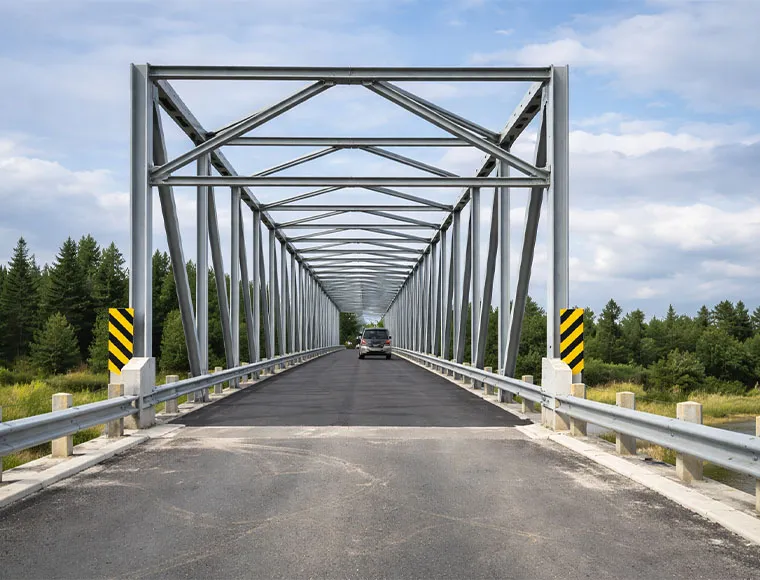
These are general engineering tendencies, not KXD performance claims. The final choice comes from span, clearance below the deck, transport limits and your inspection regime.
How Much Does a Prefabricated Steel Bridge Cost?
Q: What is KXD’s published price?
USD 40–100/m², depending on specifications. That is the range KXD publishes for its prefabricated steel bridge line. Where your project lands in it depends on the structural form, steel tonnage per square metre of deck, coating system and scope of supply.
A per-m² figure only means something once scope is fixed. Ask the quotation to state clearly whether each of these is included:
- Design calculations and shop drawings
- Primary steel, secondary steel and connection bolts
- Bearings and expansion joints
- Deck system and wearing surface
- Railings, kerbs and drainage fittings
- Coating system (paint or hot-dip galvanizing) and touch-up materials
- Packing, and the delivery term (EXW, FOB or CIF)
- Erection supervision or installation support
- Foundations and abutments (normally civil works by others; confirm)
Q: Can I buy one small footbridge?
Possibly not as a stand-alone order. KXDF-01 carries a 600 m² minimum order. Run the arithmetic early: a 3 m wide pedestrian bridge would need around 200 m of deck length to reach 600 m². A single short footbridge across a stream will fall well below that.
If your project is small, ask directly whether it can be combined with other structures in the same order, rather than assuming an exception will be made.
Lead Times: What Decides the Delivery Date
Q: How long does it take to get a prefabricated steel bridge?
KXD does not publish a fixed lead time for KXDF-01, and a credible supplier should not promise one before the design is agreed. The programme normally runs through these stages:
- Design and drawing approval. Preliminary design, your engineer’s review, revisions, then approved-for-construction drawings.
- Material procurement. Plate and sections ordered to the approved bill of materials.
- Fabrication, coating and inspection.
- Packing and freight. Ocean transit time depends on your destination port.
- Site erection. Governed by crane access, weather and abutment readiness.
Stage 1 is the one the buyer controls most. Slow drawing comments, changing the deck width after approval, or a road authority that reviews in batches can each add weeks before any steel is cut.
Q: Will the segments fit in shipping containers?
That depends on the segment lengths, which KXD sets per project against your shipping method and site access. Ask for a preliminary packing list with the quotation. Long girders may need flat-rack or break-bulk shipping, which changes both freight cost and the port handling at your end.
What Are the Real Trade-offs of Buying from an Overseas Manufacturer?
Where it works in your favour:
- Welding, cutting and surface preparation happen under factory conditions instead of on a riverbank.
- Quality management is documented. KXD lists ISO 9001, ISO 14001 and ISO 45001 among its management-system certifications; ISO identifies these as its standards for quality, environmental, and occupational health and safety management systems respectively.
- Site work shifts toward bolting and lifting, which reduces the amount of skilled site welding you need to source locally.
- A per-m² price basis is straightforward to compare with other written quotes.
Where it costs you effort:
- Local approval stays with you. In most jurisdictions an overseas design must be reviewed or adopted by a locally recognised engineer before construction. Budget for that fee and that time.
- Coating damage in transit is likely, not exceptional. Agree a touch-up procedure and include touch-up paint in the supply.
- No published span or load tables. You will spend more time in pre-quote exchanges than you would buying a catalogued building.
- Minimum order. The 600 m² MOQ rules out many single small crossings.
Which Documents Should You Request Before Signing?
Q: What should be in the document package?
- Design calculation report, stating the design code, load class and design assumptions
- General arrangement drawings and shop drawings
- Interface drawing showing bearing reactions and anchor bolt layout
- Material certificates for the structural steel supplied
- Welding procedure qualification records (KXD lists WPQR as available on request)
- Coating specification, including system, dry film thickness and touch-up method
- Inspection and test plan for fabrication
- Copies of the relevant ISO certificates
- Erection method statement and lifting plan
- Confirmation of third-party inspection arrangements, if your client or authority requires them
KXD lists SGS, Bureau Veritas and Intertek as third-party testing options on several of its product pages. Confirm in writing that the same option applies to your bridge order and who pays for it.
FAQ
Q: Does KXD sell used or stock bridges?
A: KXD’s published bridge line, KXDF-01, is fabricated to project requirements. There is no published stock or used bridge inventory.
Q: Is KXDF-01 CE marked?
A: The KXDF-01 product page lists ISO certification. CE (EN 1090) appears among KXD’s company-level certifications, mainly referenced on its building product pages. If your project is in the EU and requires CE marking for the bridge components, ask KXD to confirm in writing that it covers your bridge scope.
Q: Can KXD help with installation?
A: KXD describes its service as covering design, detailing, fabrication, export and on-site erection support. The level of support for a specific bridge (supervision only, or a crew) should be defined in the quotation.
Q: What is the fastest way to get a usable quote?
A: Send the seven items listed under “Before You Ask for a Price” in your first message, especially the vehicle type, the design code and the abutment status.
Q: Is the price per square metre of deck or per square metre of steel?
A: Ask. Published per-m² figures are generally read against plan area, but confirm the measurement basis in the quotation so you can compare it fairly with other offers.



 31 ottobre 2026