Pour comparer pont en acier préfabriqué les fabricants, vérifiez par écrit sept éléments : ce qu’ils fabriquent en interne, qui réalise les plans de détail, les dossiers de qualification en soudage, la portée des certifications, l’accès aux inspections par des tiers, l’adéquation au type de pont et la base de tarification.
1. Qu’est-ce qui est réellement fabriqué en interne ?
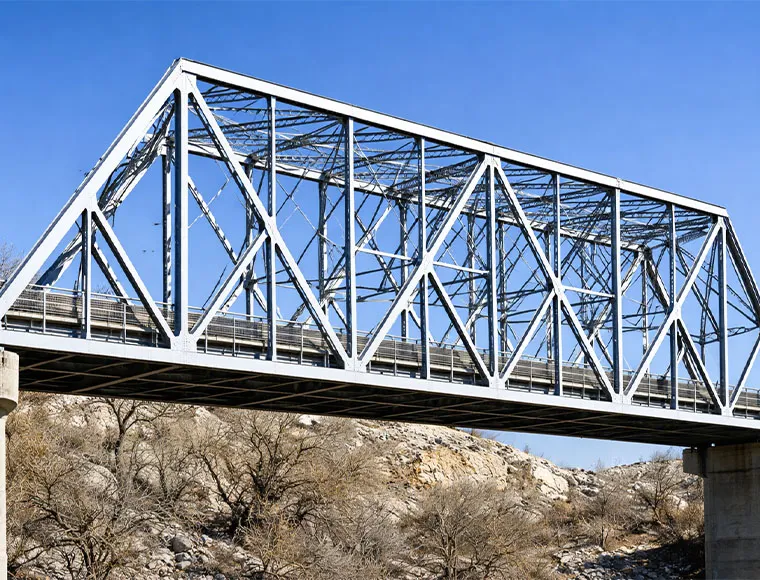
Demandez au fournisseur d’énumérer chaque étape de production et d’indiquer si elle est réalisée dans sa propre usine ou chez un sous-traitant. KXD présente la découpe CNC, le soudage automatisé, le grenaillage, le traitement de surface, l’assemblage des composants et l’inspection des produits finis comme ses principaux processus de production.
Un fournisseur qui ne peut pas préciser où sont effectués le soudage et le grenaillage est, en pratique, un intermédiaire commercial. Ce n’est pas nécessairement un problème, mais les risques liés à la qualité et aux délais de livraison reposent alors sur une partie que vous n’avez pas auditée. Par rapport aux fournisseurs faisant office d’agents d’approvisionnement, un fabricant qui maîtrise toute la chaîne, de la découpe à l’inspection, vous offre une seule entité à tenir responsable en cas de poutre non conforme.
2. Qui réalise les plans de détail, et avec quels logiciels ?
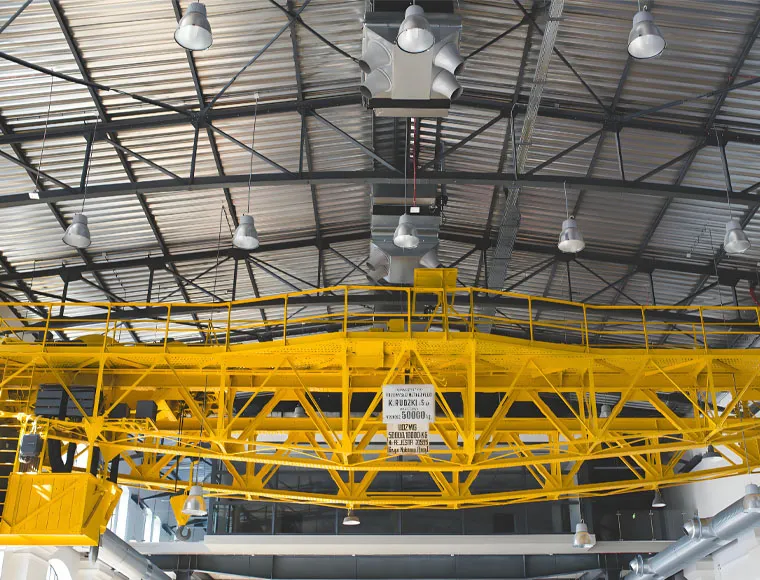
Les plans d’atelier déterminent si les différents éléments s’assembleront correctement sur le chantier. KXD indique utiliser Tekla, PKPM et 3D3S comme outils d’ingénierie en interne. Vérifiez deux autres points : si les ingénieurs du fournisseur produisent les plans d’atelier ou se contentent de recevoir les vôtres, et qui assume la responsabilité de la conception si votre projet nécessite une note de calcul visée destinée à une autorité locale.
3. Demandez le WPQR avant la signature du contrat
A Welding Procedure Qualification Record documents that a specific welding procedure was tested and passed. For bridges, where welds carry repeated live loading, it is the first document worth reading. KXD states that WPQR is available upon request. Request it at the quotation stage, and check that the qualified procedure matches the plate grades and joint types in your drawings, not just that a record exists.
4. Read the certificate’s scope, not just its name
Certificates are easy to list and easy to misread.
- ISO 9001, ISO 14001, ISO 45001. ISO describes these as its standards for quality, environmental and occupational health and safety management systems. They attest to a management system, not to the design of one particular bridge.
- CE under EN 1090. The European Commission explains that CE marking on construction products signals conformity with declared performance under a harmonised European standard or a European Technical Assessment, and its material references EN 1090 for structural products. Requirements for your project depend on where it is built.
- AISC. The American Institute of Steel Construction is the reference body for fabricator certification. KXD lists an AISC certificate as Building Fabricator with Complex Coating Endorsement P1. By its name, that is a building-fabricator category, so ask whether your owner’s specification accepts it for a bridge or demands a different category.
5. Third-party inspection: available is not the same as reported
KXD names SGS, Bureau Veritas (BV) and ITS/Intertek as third-party testing options on relevant product pages. It does not publish report numbers or downloadable inspection reports, so none can be cited here. Before signing, agree on four items in the contract: which inspector, which stages (material, welding, coating, pre-shipment), who pays, and whether the inspector reports to you directly.
6. Does the bridge type match your crossing?
KXD’s published scope covers three structural forms plus modular construction:
| Form |
General characteristic |
Typical question for the supplier |
| Pont en treillis métallique |
Open web members, suited to bolted segment assembly |
Member splice design and bolt grade |
| Pont à poutre-caisson |
Welded plate sections, simpler geometry |
Web stiffener detailing and weld inspection |
| Pont à caisson soudé |
Closed section, more welding per metre |
Internal access for coating and inspection |
| Modular / prefabricated |
Factory-built units joined on site |
Transport limits and on-site joint method |
Listed applications are highway, railway, pedestrian, industrial, mining, temporary access and urban overpass. Span limits, load ratings and design standards for the bridge are not on the published page. Request them as part of your inquiry.
7. How is the price built?
KXD’s published range for the bridge is USD 40–100 per m², depending on specifications, with an MOQ of 600 m². A per-area rate is an unusual way to price a bridge, so ask what area is being measured (deck area is the likely basis) and whether the figure covers fabrication only or also includes coating, export packing, freight and erection support. Foundations and local approvals are outside any factory price. Without span, load class and site conditions, no honest figure can be given. Treat the range as an entry point for a quotation, not a budget.
Worked comparison: manufacturer vs trading intermediary
| Check |
Manufacturer with own plant |
Trading / sourcing intermediary |
| Who holds the WPQR |
Fabricator |
Usually a third party; ask whose |
| Plant audit |
Possible at one site |
May span several workshops |
| Inspection access |
Direct at the production line |
Depends on subcontract terms |
| Lead-time control |
Single production schedule |
Dependent on subcontractor queue |
| Price |
Lower layers of margin, though not guaranteed lower |
Added coordination cost |
Where KXD’s published information is thin
For a fair comparison, here is what we have not published for the bridge: span and load limits, the design code, third-party report numbers, and a bridge-specific certificate for CE EN 1090. The published supply capacity of 8,000 tons per month is a product-page value and should not be read as dedicated bridge capacity. Ask any supplier, including KXD, to put these in the quotation.
FAQ
Can I verify a manufacturer’s certificates myself?
Request the certificate with its scope page and issuing body, then confirm with that body. For ISO and CE marking questions, ISO and the European Commission publish explanatory material on what each covers.
Does ISO 9001 certification mean the bridge design is approved?
No. It covers the supplier’s quality management system. Design approval and product conformity are separate matters.
What is the minimum order for KXD’s prefabricated steel bridge?
The published MOQ is 600 m², with a published range of USD 40–100/m² depending on specifications. The final figure needs a written quotation based on your span and load.
Does KXD offer third-party inspection on bridges?
KXD lists SGS, BV and ITS as available options on relevant product pages. Confirm the stages and the inspector in the contract, since report numbers are not published.
Which bridge types does KXD supply?
Steel truss, plate girder, welded box girder and modular prefabricated bridges, per its Prefabricated Steel Bridge page (model KXDF-01).


 16 octobre 2026